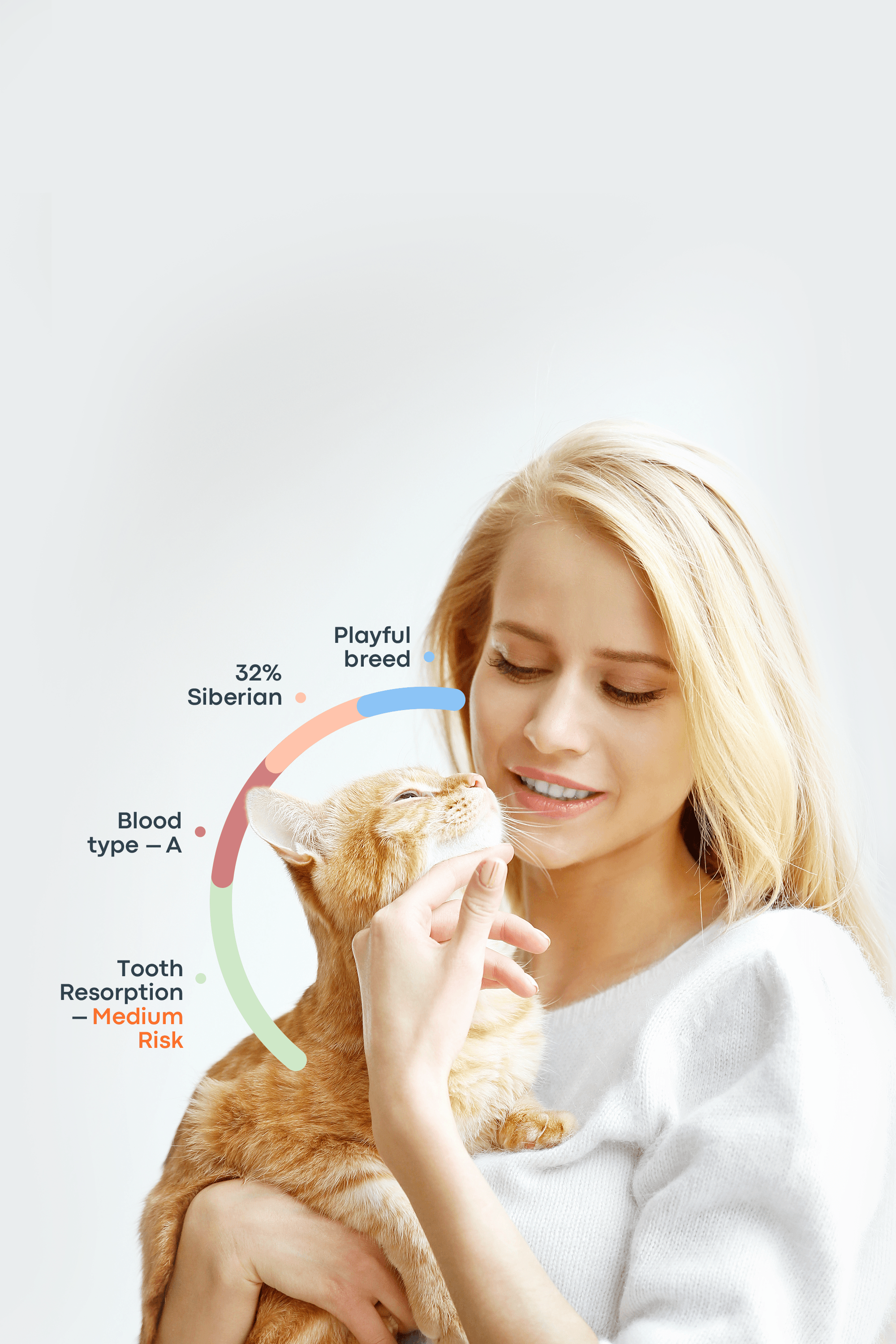
Don't know your cat's breed?
Get our DNA kit!

In this post, Basepaws shares important changes to its Cat DNA Test digital report. Learn about recent updates to genetic health markers, such as for the heart condition hypertrophic cardiomyopathy, and fun information about cat coat genetics.
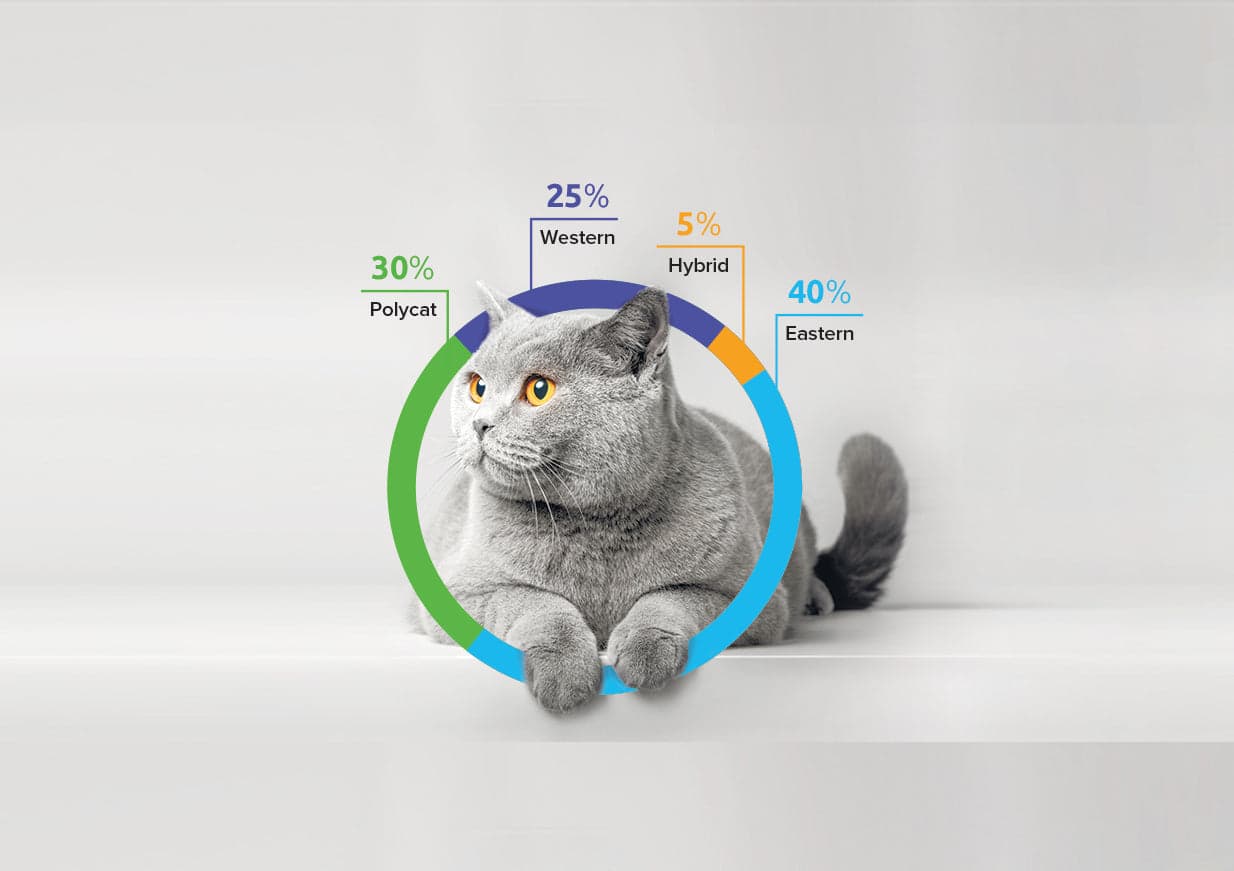
The breed analysis that you receive from a Basepaws Breed + Health Cat DNA test offers an exciting glimpse into your cat’s DNA story, yet much of it remains to be told. This includes a definitive story of ancestry, which is difficult to pin down for cats. In today’s post, we’d like to share some insight into why this is, and to explain the concept of genomic similarity that is at the heart of the Basepaws breed analysis.
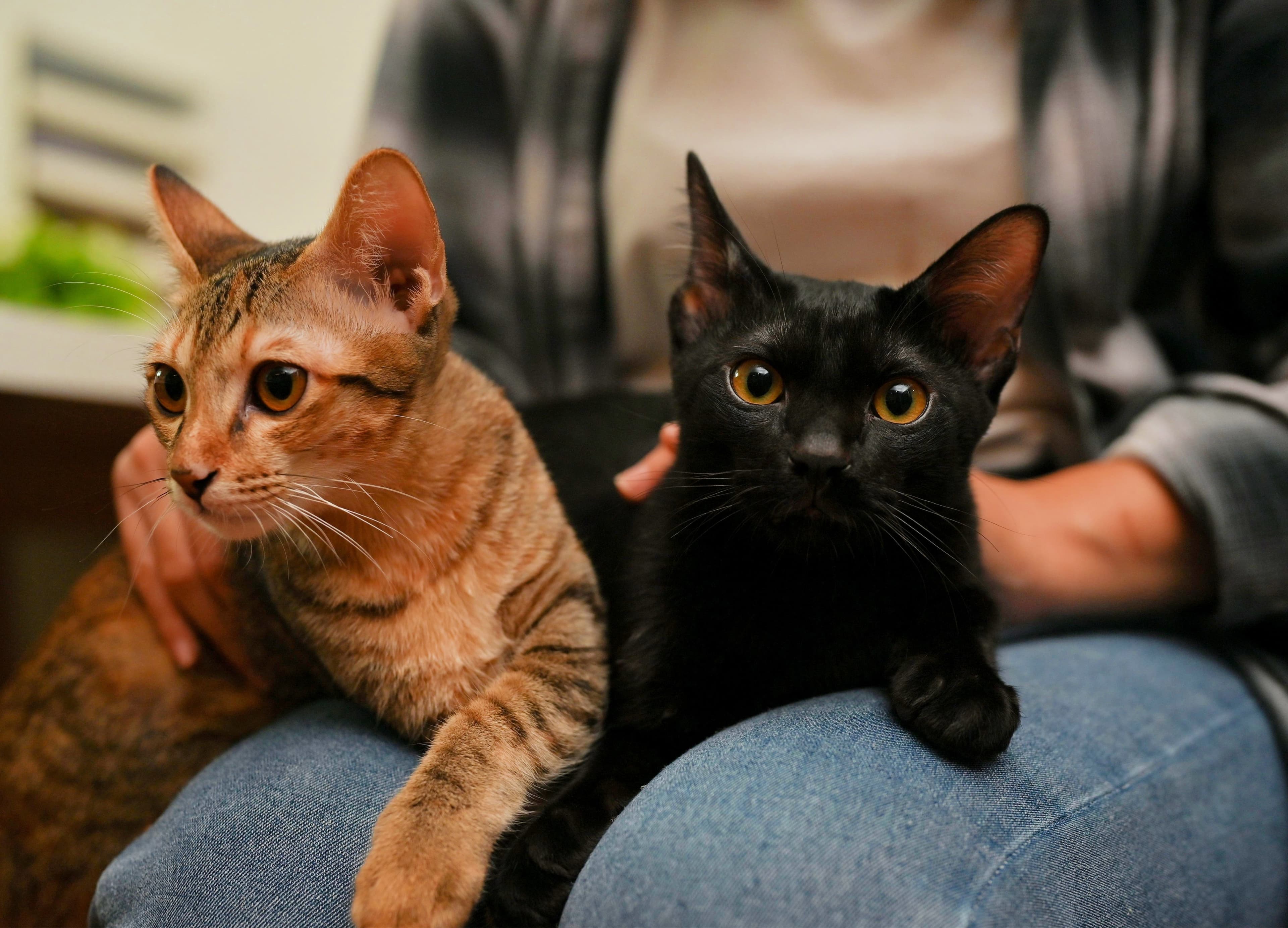
Today, we’re decoding one of the mysteries of genetics that relates to your Basepaws DNA report of results. It's called epistasis. When epistasis occurs, the observable expression (phenotype) of a gene—such as one responsible for the color of your kitty's coat—gets modified in some way by a completely different gene that has the ability to mask, suppress, or inhibit how that coat color gene is expressed. Epistasis helps explain why sometimes you may get a “likely to have” result for a genetic trait in your cat’s Basepaws report that doesn’t quite match up with their physical appearance.