Can cats eat cantaloupe? Yes — in moderation, this sweet melon is safe and can even be a healthy treat for our feline friends.
Do Cats Like Cantaloupe?
So, cats can eat cantaloupe — but do they actually like it? According to experts at PetMD, many cats do enjoy a piece of cantaloupe now and then. While humans appreciate it for its sweet, fruity taste, cats are drawn to it for a different reason: its chemical makeup. Specifically, the amino acids in cantaloupe give off a scent that’s similar to the smell of meat — something that naturally appeals to feline instincts.
Is Cantaloupe Good for Cats?
Cantaloupe is rich in vitamins A and C and has a high water content, making it a hydrating and healthy treat for cats. The water in this juicy fruit can be especially beneficial for cats prone to dehydration or those who need a little extra moisture in their diet for medical reasons.
It’s also low in fat, high in potassium, and contains a small amount of dietary fiber. While cantaloupe isn’t an essential part of a cat’s diet, its nutritional profile makes it a safe and occasional treat.
Is Cantaloupe Bad for Cats in Some Cases?
The phrase “too much of a good thing” applies to cats and cantaloupe. While cantaloupe is an excellent treat, there are, of course, instances when it proves to be a bad choice. For example, if your cat is diabetic or overweight, fruit–including cantaloupe—probably isn’t the best snack choice. It contains natural sugars that can cause glucose spikes, which can be particularly detrimental to cats with diabetes.
Beyond concerns about sugar content, some cats may simply not tolerate cantaloupe well. In these cases, your cat may have a sensitivity or mild allergy to the fruit and should not be given it again.
Symptoms of cantaloupe intolerance or allergy may include:
Vomiting
Loose stool
Itching
If your cat has never tried cantaloupe before, start with a very small piece and monitor them closely for any signs of discomfort or adverse reaction.
Is Cantaloupe Safe for Cats to Eat?
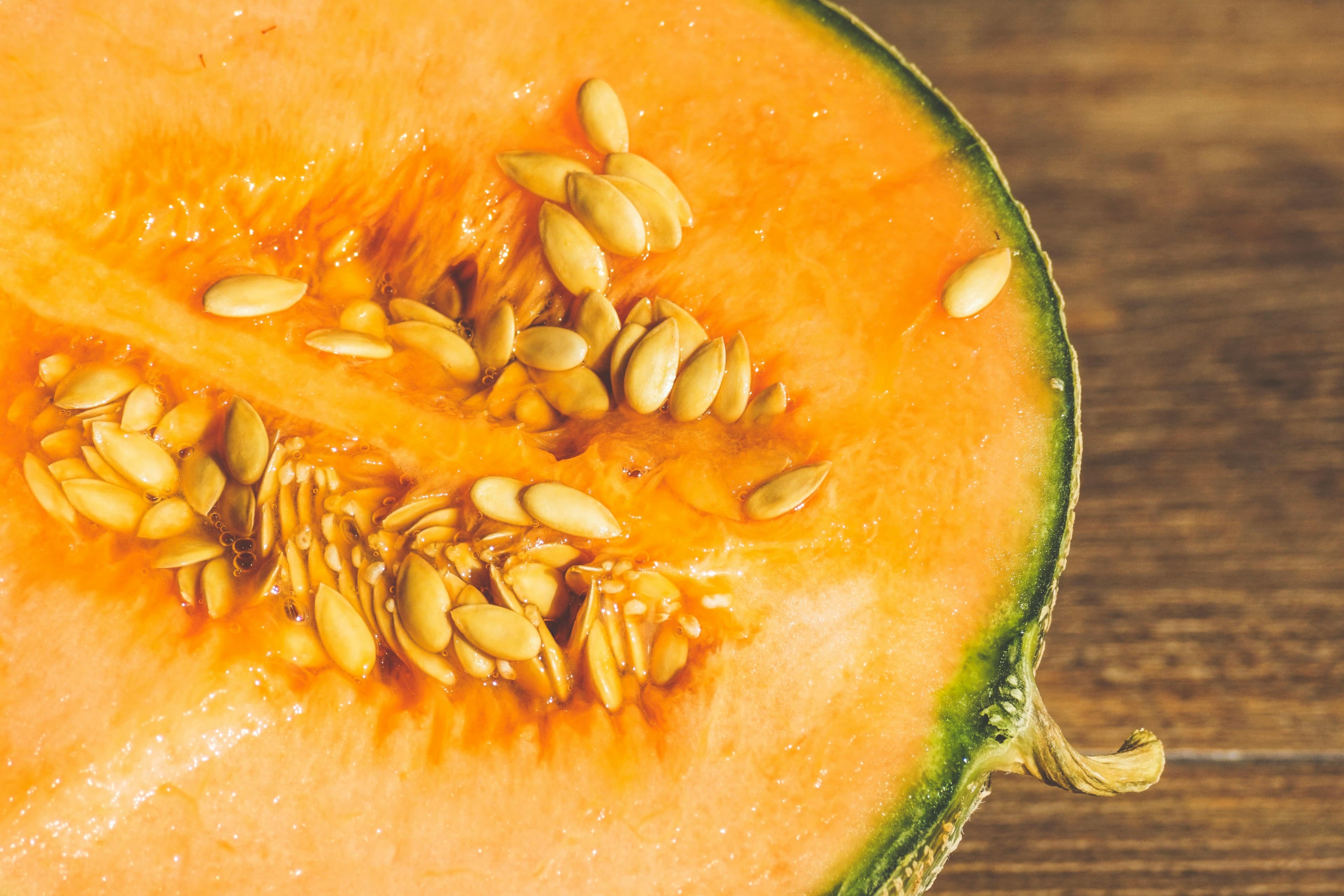
Yes — cantaloupe is safe for cats to eat in small amounts. However, only the sweet, orange flesh should be offered. Avoid giving your cat the rind or seeds, as these can pose choking hazards and may even cause intestinal blockages.
Because the flesh is so soft, some cats might not enjoy the texture. Just like people, cats have individual taste and texture preferences — so don’t be surprised if yours isn’t interested!
Are Cantaloupe Seeds or Rind Dangerous for Cats?
Yes, the rind and seeds of cantaloupe can be dangerous for cats. In addition to being potential choking hazards, the seeds may contain trace amounts of cyanide. While the levels are generally too low to harm humans, cats are much smaller and more sensitive — meaning even a small amount could lead to poisoning or digestive upset.
To keep your cat safe, always remove the rind and seeds before offering any cantaloupe, and serve only a small piece of the fruit’s soft flesh as an occasional treat.

How to Feed Cantaloupe to Your Cat Safely
Now that we know cantaloupe is a safe snack for most cats, let’s talk about how to prepare it properly.
Start by thoroughly washing the outer skin of the cantaloupe. Use a vegetable brush to remove any dirt or pesticide residue. Then, using a sharp knife, slice off both ends of the fruit to create flat surfaces—this will prevent it from wobbling while you cut.
Stand the cantaloupe upright on one of the flat ends and carefully slice off the rind, following the curve of the fruit. Take your time and keep your knife steady to avoid slipping. Once peeled, cut the cantaloupe in half and scoop out the seeds with a spoon. If the seeds are stubborn, you can remove them by hand—it’s perfectly safe to touch them.
Next, cut a small portion of the fruit into bite-sized pieces for your cat. One or two small cubes are enough. Make sure the pieces are soft, manageable, and easy for your cat to chew.
In the summer, your cat might enjoy a chilled cube of cantaloupe straight from the fridge — think of it as a feline popsicle: cool, refreshing, and hydrating on a hot day!
Serving Size Guidelines
Regardless of your cat’s size (except for very young kittens), cantaloupe should be offered in moderation. The general recommendation is 1–2 teaspoons no more than once or twice per week, primarily due to its natural sugar content.
For kittens under one year old, it’s best to avoid cantaloupe altogether until their digestive systems are fully developed and they’re used to solid cat food. Once they reach adulthood, small portions can be gradually introduced.
Cat Size | Serving Size | Frequency | Notes |
Small (5–8 lbs) | 1 tsp | Once or twice per week | Monitor for any signs of intolerance |
Medium (9–12 lbs) | 1–2 tsp | Once or twice per week | Avoid giving more than 10g at once |
Large (13+ lbs) | Up to 1 tbsp | Once or twice per week | Only if the cat has no underlying health issues |
Kittens (<1 year) | Not recommended | – | Wait until the cat is at least 1 year old |
Final Thoughts: Can Cats Have Cantaloupe?
Cats can eat cantaloupe — but only in small amounts and as an occasional treat, not a regular part of their diet. Serving size should be based on your cat’s weight and health status.
Even in small portions, cantaloupe offers health benefits such as hydration, vitamins A and C, potassium, and dietary fiber. However, it's crucial to only offer the soft, orange flesh. The rind and seeds can pose risks such as choking, digestive issues, or even poisoning, so they should always be removed before serving.
Frequently Asked Questions
Can kittens eat cantaloupe?
Kittens shouldn’t eat cantaloupe. It’s not recommended that cats under one year old have fruit such as cantaloupe.
Can cats eat cantaloupe melon?
Yes, cats can eat a variety of melons—including cantaloupe!
Which fruit do cats like the most?
They tend to enjoy bananas, watermelon, cantaloupe, and berries like strawberries and blueberries.
Are cantaloupe cats healthy?
There’s nothing wrong with your cat if he or she likes cantaloupe! A cat’s cantaloupe affinity isn’t uncommon due to the amino acids within the fruit that smell like meat (to cats, anyways!).