Understanding when to switch from kitten food to adult cat food is an important part of supporting your pet’s healthy growth and development. Kittens need a nutrient-dense, high-calorie diet tailored to their active, fast-growing bodies—which is why kitten-specific food is essential in the early months.
But what happens if a kitten eats adult cat food? Can kittens eat adult food safely? Let’s take a closer look.
Can Kittens Eat Adult Cat Food?
If you’re asking, “Is it bad for a kitten to eat adult cat food?”—we’re here to help you make the best decision for your growing pet. While it’s generally harmless if a kitten occasionally nibbles on adult cat food, it’s not recommended as part of their regular diet.
That’s because adult cat food lacks several key nutrients that are essential for healthy kitten development—such as higher levels of protein, calories, and DHA, which support brain development, muscle growth, and energy needs.
Let’s break it down further to help you choose the right food to support your kitten’s health and long-term well-being.
What Happens If My Kitten Eats My Older Cat’s Food?
Is cat food bad for kittens? Not exactly. Occasional snacking on your older cat’s food isn’t harmful, but regular consumption can negatively affect your kitten’s development.
Kitten food is specially formulated to support rapid growth and development, offering higher levels of protein, fat, DHA, and other essential nutrients. Adult cat food lacks many of these nutrients, making it an incomplete diet for a growing kitten.
Prolonged feeding of adult food to a kitten may lead to nutritional deficiencies, which can cause:
Stunted growth
Bone development issues
Digestive problems
Low energy levels
Weakened immune system
Additionally, if adult cat food is left out for kittens to graze on freely, it may lead to overeating and unhealthy weight gain, since kittens often eat more frequently than adult cats.
To support your kitten’s health, it’s best to keep their diet kitten-specific until they reach maturity—usually around 12 months of age, or as advised by your veterinarian.
Kitten Food vs Adult Cat Food
Can you feed a kitten adult cat food? Here is what you need to understand about your kitten’s extra nutritional needs that adult cat food lacks, which can help you make the correct choice for your little friend.
Nutrient
| Kitten Food (Growth & Development) | Adult Cat Food (Maintenance) |
Calories | Higher — supports rapid growth & activity | Moderate — supports maintenance, not growth |
Protein | > 30% (dry matter) | > 26% (dry matter) |
Fat | > 9% (dry matter) | > 9% (dry matter) |
Calcium | 1.0-1.6% (to support bone development) | 0.6-0.9% |
Taurine | > 0.20% (essential for vision and heart development) | > 0.10% |
DHA (Omega-3) | Added for brain and vision development | Often not included or in lower amounts |
Note: Actual nutrient values may vary by brand, so always check the label. Kitten food is calorie and nutrient-rich to support bone growth, muscle development, and neurological function during the first year of life.
Can Kittens Eat Regular Wet Cat Food or Canned Cat Food?
While kittens can technically eat adult wet cat food on occasion, it’s not ideal for regular feeding. Adult wet food is designed for maintenance, not growth, and often lacks the higher levels of protein, fat, DHA, and other nutrients that kittens need during their rapid developmental stage.
However, many brands offer wet food specifically formulated for kittens—these are excellent choices, especially during weaning. Wet food is soft, easy to chew, and gentle on a kitten’s digestive system. It also provides extra hydration, which is important since kittens often don’t drink enough water on their own.
Containing 70–80% moisture, wet food helps:
Keep kittens hydrated
Support healthy urination and reduce the risk of urinary tract infections
Ease digestion for sensitive stomachs
Encourage eating with its appealing texture and aroma—especially helpful for picky eaters
When choosing wet food for your kitten, always check the label. Look for phrases like “formulated for kittens” or “for all life stages” to ensure your kitten gets the complete nutrition they need.
Can Kittens Eat Hard Cat Food (Dry Kibble)?
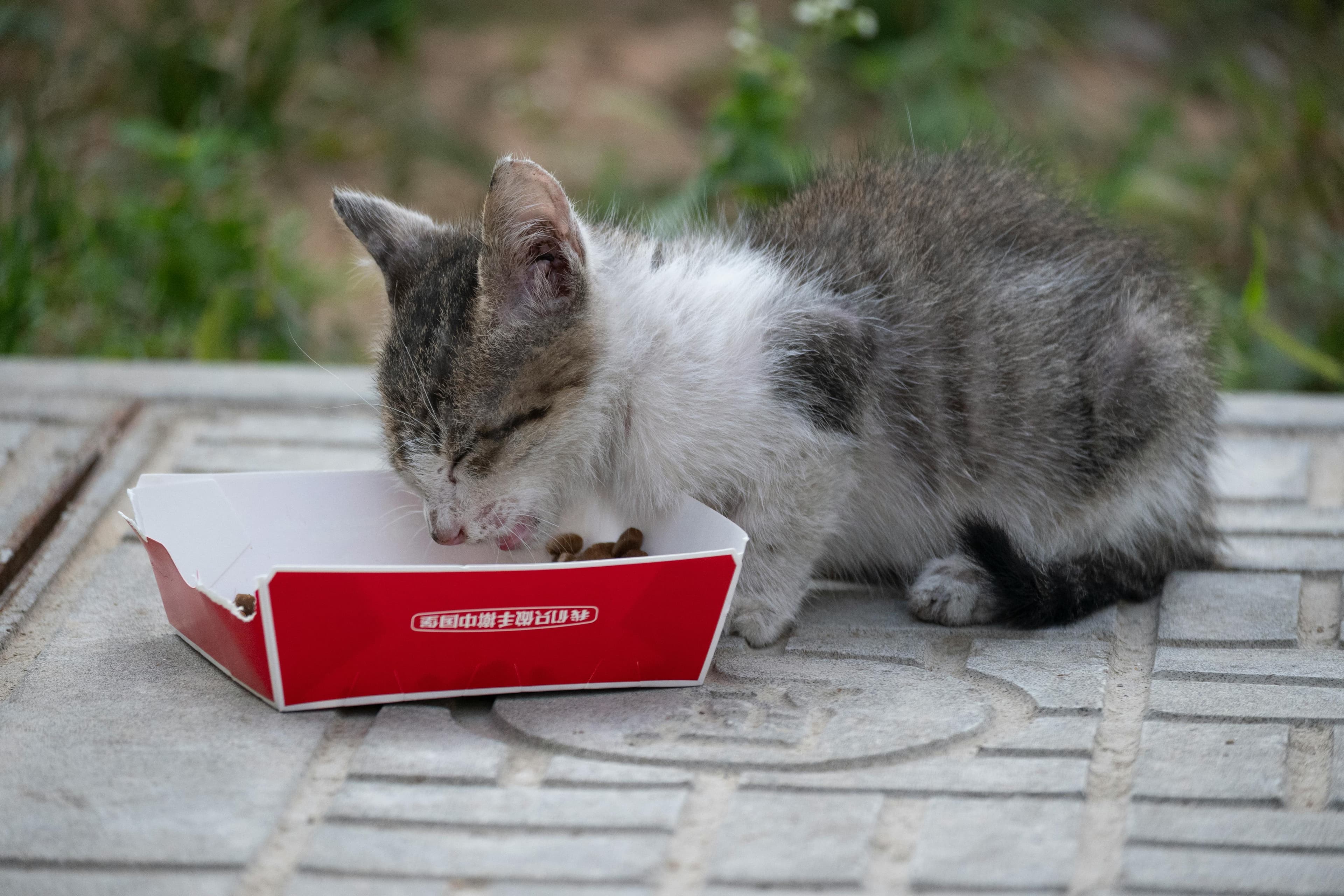
Yes, kittens can eat dry kibble—but it should be introduced gradually, typically between 4 to 6 weeks of age during the weaning process. However, it's important to choose the right type and texture of kibble for their age and development.
Kitten-specific kibble is smaller in size (around 4–6 mm across) and often softer and easier to chew than adult cat food. It’s designed to be gentle on developing teeth and jaws, while still maintaining a slight crunch to encourage chewing.
Feeding adult dry cat food to kittens is not recommended for several reasons:
Lower Caloric Density: Growing kittens require more calories per pound than adults. While adult dry kibble typically contains 300–350 kcal per 100g, kitten formulas provide around 500 kcal per 100g—enough to support rapid growth and development.
Risk of Dehydration: Dry kibble contains only 5–15% moisture, and since kittens don’t naturally drink much water, feeding only dry food can lead to dehydration. It’s often better to moisten the kibble or offer a mix of wet and dry food to ensure adequate hydration.
Incomplete Nutrition: Adult kibble may lack essential nutrients like DHA, higher protein, and specific vitamins crucial for kittens’ brain development, immune support, and muscle growth.
Dental Health Misconceptions: While many believe dry kibble helps clean teeth, most commercial dry cat foods do not reduce plaque or tartar buildup. Only veterinary-approved dental diets with the Veterinary Oral Health Council (VOHC) seal are clinically proven to support dental health.
Stick to kitten-formulated dry food if you choose to feed kibble, and ensure it's part of a balanced diet that includes adequate hydration and calories. When in doubt, consult your vet for the best feeding plan based on your kitten's age, weight, and health status.

When Can Kittens Start Eating Adult Cat Food?
According to veterinary nutritionists cited by VCA Animal Hospitals, kittens should transition to adult cat food around 12 months of age, once they’ve reached maturity. However, larger breeds like Maine Coons take longer to fully develop—often not reaching full maturity until 18 months to 2 years.
In general, a cat is considered mature when they reach 80% to 90% of their expected adult size. That said, every cat grows at a different pace, so it's always best to consult your veterinarian to determine the right time to transition your kitten to adult food.
How to Choose the Right Formula for Your Kitten
Transitioning your kitten to adult cat food should be done gradually and thoughtfully. One good option is to begin with a high-quality “all life stages” formula, which can serve as a transitional bridge between kitten and adult food.
Here are some vet-recommended brands that offer both kitten and adult formulas to support a smoother and healthier transition:
Royal Canin Kitten (Dry/Wet)
Hill’s Science Diet Kitten (Dry and Canned)
Purina Pro Plan Kitten – Chicken & Rice Formula
These brands are formulated to support the unique nutritional needs of kittens and offer complementary adult formulas, making it easier to maintain consistency during the transition.
How to Switch from Kitten Food to Adult Cat Food
Transitioning from kitten food to adult cat food should be done gradually to prevent digestive upset and give your cat’s system time to adjust to the new nutritional profile.
Kittens require a calorie- and nutrient-dense diet to support rapid growth, while adult cats need a more balanced formula for maintenance. Switching foods too abruptly can lead to issues such as vomiting, diarrhea, or food refusal.
If your kitten is underweight or has any special dietary needs, consult your veterinarian before making any changes.
Day | Kitten Food | Adult Cat Food | Notes |
Day 1–2 | 75% | 25% | Mix a small amount of adult food |
Day 3–4 | 50% | 50% | Monitor for soft stool or appetite changes |
Day 5–6 | 25% | 75% | Appetite should stabilize |
Day 7+ | 0% | 100% | Fully transitioned to adult food |
Tip: Monitor your kitten for any signs of digestive upset or changes in appetite during the transition. If any issues arise, slow the process down or consult your veterinarian.
Additional Tips
Mix both foods in the same bowl to prevent your cat from picking one over the other.
If needed, feed smaller, more frequent meals during the transition to support digestion.
Watch for warning signs like vomiting, diarrhea, or refusal to eat.
If your kitten stops eating or seems unwell, pause the transition and consult your veterinarian.
Tips for Feeding a Multi-Cat Household
Feeding multiple cats can be challenging, especially when they have different dietary needs or personalities. According to PetMD, several strategies can help ensure that each cat eats properly without conflict.
1. Set Up Multiple Feeding Stations
Each cat should have their own designated spot for eating and drinking. Separate feeding areas reduce food guarding, resource competition, and stress. Ideally, place bowls in different rooms or areas out of sight from each other.
2. Monitor Mealtimes
Supervise feeding to ensure that every cat has access to food and isn’t being pushed away or intimidated. This is especially important for shy or submissive cats.
3. Feed at Specific Times
Avoid free-feeding (leaving food out all day). Instead, establish set meal times for each cat. Scheduled feeding allows you to monitor their appetite and health more easily and prevents one cat from overeating or stealing another’s food. It also gives you a chance to bond individually with each cat during mealtime.
Provide Ample Resources
Beyond food, a harmonious multi-cat household requires plenty of shared and individual resources, including:
Fresh water bowls in multiple locations
Enough litter boxes (one per cat, plus one extra is recommended)
Scratching posts and toys
Cozy, quiet places where each cat can retreat and feel safe
Providing these essentials reduces stress and competition, helping your cats thrive together peacefully.
Final Thoughts on Feeding Adult Food to Kittens
While a kitten eating cat food occasionally is not harmful, it’s not recommended as part of their regular diet. Kittens have higher nutritional needs—especially for protein, fat, and calories—to support their rapid growth and development. For optimal health, it's best to feed kittens a specially formulated kitten diet until they are about one year old.
Additionally, always consult your veterinarian for personalized feeding advice, particularly in multi-pet households where kittens may have easy access to adult food. Your vet can help you create a feeding plan tailored to your kitten’s specific needs, supporting proper growth and long-term well-being.
Frequently Asked Questions
Can kittens eat adult cat food in a pinch?
A kitten eating adult cat food in a pinch does not cause harm, but it is not ideal for them as a regular diet because it lacks the essential nutrients required for healthy growth and development.
Can I give adult cat food to a one-month-old kitten?
No, you should not feed adult cat food to a one-month-old kitten. Kitten food is specially formulated to meet the higher nutritional needs of growing kittens, while adult cat food is only designed for adult felines with different dietary requirements.
Can a 3-month-old kitten eat dry food for an adult cat?
No, a 3-month-old kitten should not be primarily fed dry food designed for adult cats because kittens have different nutritional requirements than adult cats. Kitten food is formulated to support growth and development.
Can I feed my 7-month-old kitten adult cat food?
You can start gradually introducing adult cat food to your 7-month-old kitten, but it should not completely replace kitten food just yet. Kittens are still growing rapidly at this age and require higher nutritional content found in kitten formulas.
Should I be concerned if my kitten wants to eat my other adult cat’s dry cat food leftovers?
Though adult cat food does not contain the appropriate amount of nutrition for a growing kitten, if your kitten occasionally eats adult cat food from another cat’s bowl, there is no need to worry, according to an by the vets.
Reference List
https://vcahospitals.com/pediatric/kitten/nutrition/when-to-switch-kitten-to-adult-food
https://thevets.com/resources/pet-nutrition/can-kittens-eat-adult-cat-food/
https://vcahospitals.com/pediatric/kitten/nutrition/when-to-switch-kitten-to-adult-food
https://www.petmd.com/cat/nutrition/wet-cat-food-vs-dry-cat-food-which-better