
Dog pregnancy is short, about two months, so knowing what is normal helps you plan and spot red flags early. This period, known as the gestation period, covers the entire pregnancy during which embryos develop into fully formed puppies.
In this article, you’ll learn how long pregnancy lasts in days, weeks, and months, along with a clear timeline of development, early signs to watch for, how veterinarians confirm pregnancy, what to expect during labor and whelping, which types of discharge are normal, and when it’s important to seek veterinary care.
What Is the Dog Gestation Period?
The dog gestation period is the length of pregnancy, and it’s easiest to estimate when you know what date you’re counting from. In most dogs, pregnancy lasts about 63 days (around nine weeks), although slight variations are normal. You may see different estimates because some calculations start from the breeding date, while others use the ovulation date, which is generally more accurate. As a result, veterinarians usually provide a due date range rather than a single exact day, since factors like breeding timing, ovulation, litter size, and natural variation can influence when a dog gives birth.
How Long Are Dogs Pregnant?
Most dogs are pregnant for about 63 days, but normal can be a window, not a single exact date. According to the American Kennel Club (AKC), many dogs give birth between about 58 and 68 days of pregnancy. This variation occurs because the breeding date does not always match the exact moment of ovulation or conception. Sperm can survive inside the female for several days, and ovulation timing can vary from one cycle to another, making a single mating date an imprecise predictor. For a more accurate estimate, a veterinarian may use physical exams, hormone testing, or ultrasound to better determine the expected due date.

How Many Days Is a Dog Pregnant?
A dog is typically pregnant for about 63 days on average. However, according to VCA Hospitals, normal canine pregnancies usually fall within a range of about 58 to 68 days. The “average” refers to the midpoint most commonly seen in healthy pregnancies, although some dogs may give birth slightly earlier or later. This variation is normal and often depends on factors like ovulation timing and individual differences.
How Many Weeks Are Dogs Pregnant?
According to Baldivis Vets, dogs are usually pregnant for about nine weeks. In most cases, the dog gestation period falls within a normal range of roughly eight to nine and a half weeks, which equals about 58 to 68 days of pregnancy.
How Long Are Dogs Pregnant in Months?
In months, a dog’s pregnancy lasts about two months. More precisely, the typical 58 to 68-day gestation period equals roughly 1.9 to 2.2 months. This is only an approximation, since calendar months vary in length, but it provides a simple way to understand the timeline.
Dog Pregnancy Timeline (Stages of Dog Pregnancy)
A dog pregnancy timeline helps you know what to expect each week—even when your dog looks totally normal at first. These stages of dog pregnancy provide a general overview for owners, not a diagnostic tool, and many pets show few obvious signs during the early weeks.
Timeline at a Glance:
Week 1–3: Early development happens internally. In most dogs, fertilized eggs implant in the uterus, but they usually still look and behave normally. Some may have mild appetite changes or seem slightly more tired than usual.
Week 4–6: Physical changes often become more noticeable. The abdomen may begin to enlarge, nipples can appear more prominent, and appetite typically increases as the puppies continue to grow.
Week 7–9: The belly becomes clearly enlarged as the puppies develop rapidly. The mother may begin nesting behaviors, such as seeking a quiet space, as they prepare for birth and the due date approaches.
Signs of Pregnancy in Dogs
Dog in pup signs can be easy to miss at first—many dogs don’t look pregnant for weeks. The signs of pregnancy in dogs are often subtle in the early stages and should be seen as a general guide rather than a confirmation checklist.
Common signs of pregnancy in dogs include:
Mild behavior changes, such as increased affection or appearing more tired than usual
Changes in appetite, including a temporary decrease early on or increased hunger later
Enlarged or darker nipples as the mammary glands develop
Gradual belly enlargement as pregnancy progresses
Nesting behavior in the final weeks before birth
Because these signs can also be linked to other health conditions, it’s important to seek veterinary confirmation if pregnancy is suspected.
How to Tell if a Dog Is Pregnant
The most reliable way to tell if a dog is pregnant is veterinary confirmation—symptoms alone can be misleading. According to Peterborough Vets, owners may notice subtle changes such as described above, but these signs are not specific and can occur with other conditions.
A veterinarian can confirm pregnancy in a dog through a physical exam and, depending on timing, may recommend diagnostic methods such as ultrasound or hormone testing. Timing is important, as certain tests are more accurate at specific stages of pregnancy. Proper confirmation helps estimate the due date window and allows you to plan for care, nutrition, and the whelping process.
When Can Dogs Get Pregnant?
Dogs can only get pregnant during heat, and the fertile window can be shorter than many owners expect. Female dogs go through a reproductive cycle called the heat cycle, which includes several stages, with pregnancy possible during the fertile phase when ovulation occurs and they are receptive to mating. The exact timing of ovulation can vary from one cycle to another, making the fertile window difficult to predict accurately.
If pregnancy is not planned, it’s important to take precautions during heat and keep female dogs away from intact males. Pet owners should consult a veterinarian about appropriate prevention options and responsible reproductive management, such as supervision, separation, or long-term solutions like spaying.

How Do Dogs Get Pregnant?
Understanding ovulation timing explains why due dates are often estimated as a range. In dogs, pregnancy occurs when mating happens during the female’s fertile window within their heat cycle. However, ovulation does not always occur on the exact day of mating, and sperm can survive inside the reproductive tract for several days. Because of this, the breeding date does not always match the precise moment of conception. This natural variation is why veterinarians typically estimate pregnancy length as a due date window rather than a single exact day.
Signs of Labor in Dogs and Whelping Basics
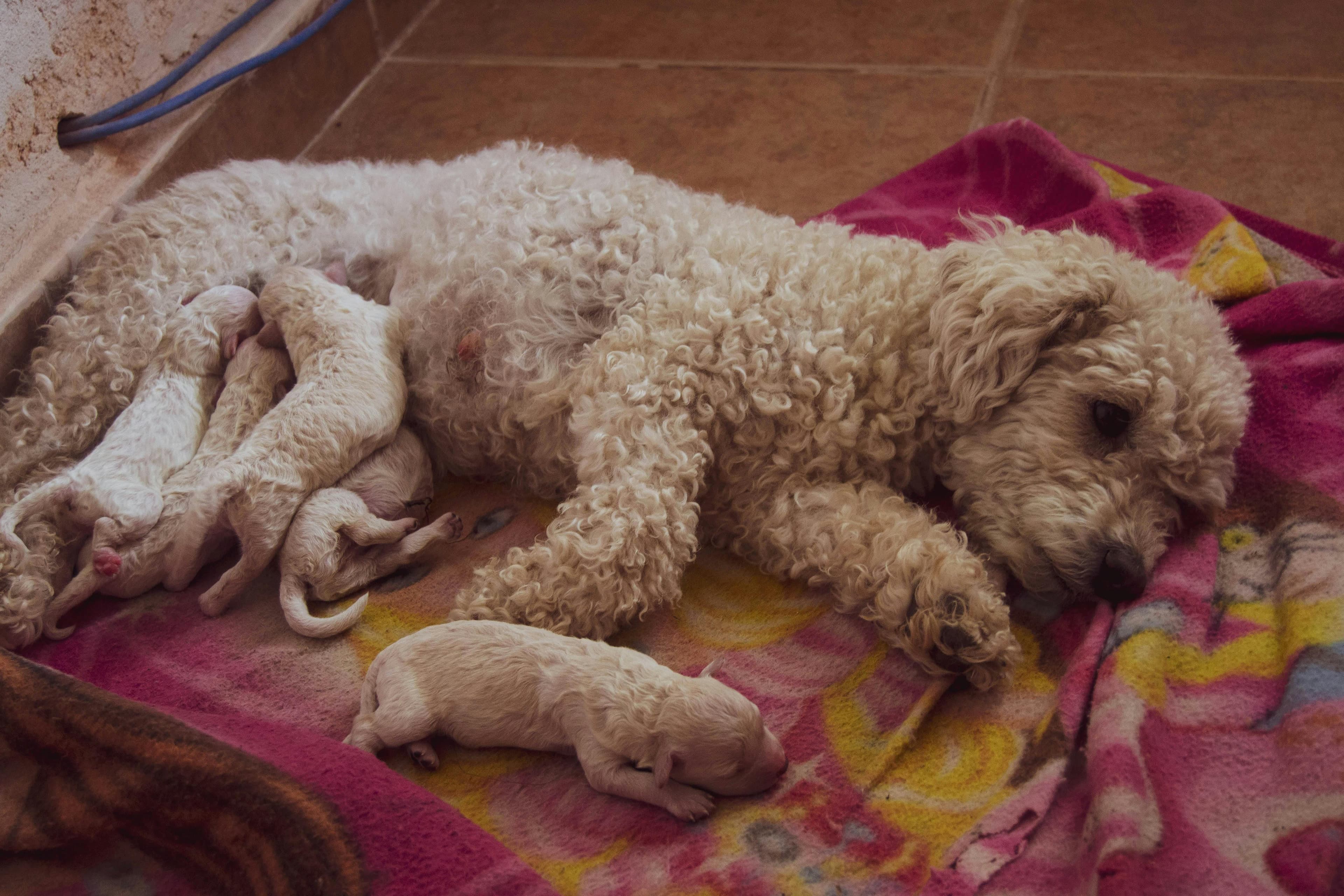
Whelping usually follows a predictable pattern, but knowing what’s normal helps you spot trouble early. According to PetMD, whelping is the process of a dog giving birth, and labor typically occurs in stages. Early labor may include restlessness, nesting behavior, panting, or a reduced appetite, while later stages involve visible contractions and the delivery of puppies one by one.
Before the due window, prepare a quiet, comfortable space with clean bedding where the mother can give birth without disturbance. It’s also important to keep your veterinarian’s contact details and the number of the nearest emergency clinic readily available in case any complications arise.
How Long Can a Dog Be in Labor?
Just like in humans, labor in dogs can vary widely in length. Some dogs deliver their puppies within a few hours, while others may take much longer—especially with larger litters—and pauses between puppies are normal. It’s important to monitor progress without interfering unnecessarily, as each birth can follow its own pace. Contact your veterinarian if labor appears to stall, if there are long delays between puppies, or if your dog shows any signs of distress or illness at any point.
How Long Does It Take a Dog to Have Puppies?
Total delivery time varies from dog to dog, so it’s best to focus on steady progress rather than exact timing. In most dogs, puppies should continue arriving at regular intervals, even if there are short breaks between births. Monitor the mother closely for signs that labor is progressing normally. Contact your veterinarian if the dam’s progress appears stalled or if they show signs of distress or illness at any point.
Longest Time Between Puppies Being Born
Short pauses between puppies can happen during labor, as the mother may rest before the next puppy arrives. In dogs, these breaks are usually normal, but very long gaps are not—especially if the dog appears distressed, weak, or unwell.
If you believe it has been the longest time between puppies being born or notice any signs that something is wrong, contact your veterinarian right away for guidance.

Pregnant Dog Discharge
Discharge isn’t automatically an emergency—but a bad smell, heavy bleeding, or a sick-looking mom dog is not normal. For a specific pregnant dog, discharge can occur during late pregnancy and after giving birth as the body prepares for and recovers from whelping. Normal discharge is typically light, with no strong or unpleasant odor.
Concerning signs include foul-smelling discharge, unusually heavy bleeding, abnormal colors (such as dark green, black, or pus-like), or a mother dog that appears weak, feverish, or unwell. If you notice any of these changes, contact your veterinarian promptly for guidance and care.
What Are Bad Signs After a Dog Gives Birth?
If your dog seems unusually weak or unwell after delivery, don’t wait—seek veterinary care right away. Most dogs recover normally after whelping, but certain symptoms can signal a serious problem. Watch for these red flags after birth:
Heavy bleeding that does not slow down
Foul-smelling discharge
Fever or a very hot body (including ears)
Collapse, extreme weakness, or inability to stand
Breathing trouble or rapid breathing
Severe lethargy or unusual behavior
Refusing food or water
Discharge that becomes heavier, darker, or worsens over time
Seizures or body tremors
Puppies not nursing while the mother appears unwell
Higher-risk dogs—such as very small breeds, brachycephalic breeds, first-time mothers, or those with previous complications—should be evaluated promptly. The next steps depend on the symptoms and how soon they appear after delivery, so timely veterinary care is essential.
Frequently Asked Questions
Does litter size affect the due date range?
Yes, litter size can slightly influence timing in dogs; those carrying larger litters may deliver a bit earlier, while smaller litters sometimes result in a slightly longer pregnancy.
Can a dog have a false pregnancy, and how can it look similar?
Yes, dogs can experience a false pregnancy (pseudopregnancy), where hormonal changes lead to signs like nesting, enlarged nipples, and even milk production, closely mimicking a real pregnancy.
What’s a common reason the mating date doesn’t match the actual conception date?
A common reason is that ovulation may occur several days after mating, and since sperm can survive in the female’s body for days, conception can happen later than the breeding date.
Should you change feeding amounts during pregnancy, and when do vets usually recommend adjustments?
Yes, feeding typically stays the same in early pregnancy, but veterinarians often recommend gradually increasing food intake during the final third, when puppies grow most rapidly.
Is exercise safe during pregnancy, and what types are generally appropriate?
Yes, moderate exercise is generally safe. Gentle activities like short walks and light play help maintain fitness without placing too much strain on the dog.
Are certain breeds more likely to need veterinary help with delivery?
Yes, some breeds—especially brachycephalic dogs like Bulldogs and Pugs—are more likely to need veterinary assistance or a C-section due to their body shape and the puppies’ head size.
What supplies should you have ready before whelping begins (basic checklist)?
Basic supplies include a whelping box, clean towels, disposable gloves, scissors and thread (for umbilical cords), a bulb syringe to clear airways, a safe heating source, and your veterinarian’s contact details.
How long can postpartum discharge last in general, and what changes are concerning?
Postpartum discharge (lochia) can normally last up to about three weeks. Seek veterinary care if it becomes foul-smelling, very heavy, turns bright red again after fading, or is accompanied by fever, lethargy, or other signs of illness.