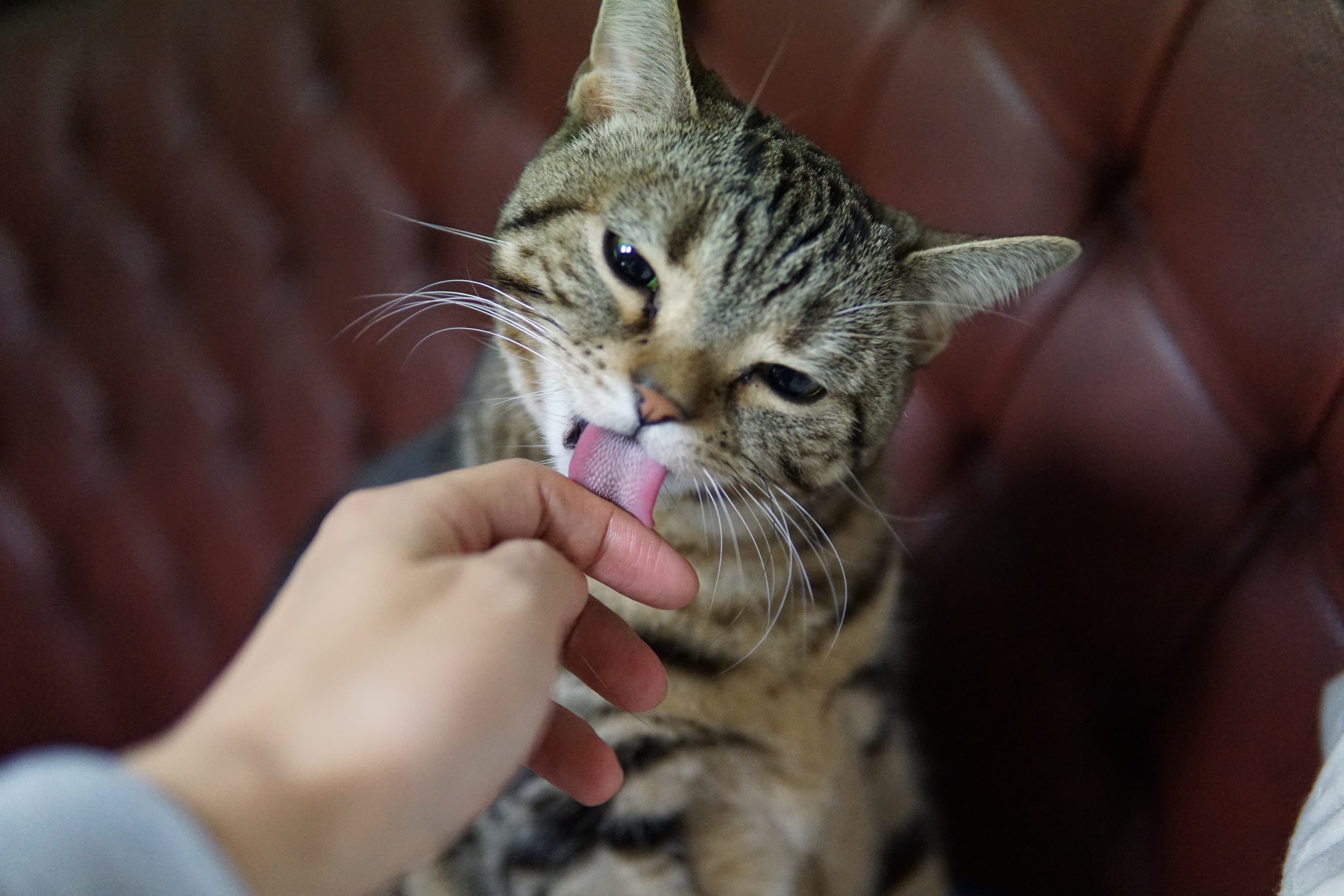
Cats licking their owners is usually a normal and healthy part of feline behavior. In most cases, it’s nothing to worry about. Cats may lick for several reasons — to show affection, bond through social grooming, seek attention, explore the taste of their owner’s skin (especially if it’s salty), or soothe themselves when they feel stressed.
The key is to look at the context. When does the licking happen? How intense or frequent is it? Has anything else changed in their behavior, routine, or environment? A sudden increase in licking or obsessive behavior can sometimes point to anxiety, boredom, skin irritation, or an underlying medical issue.
If you’ve been wondering, “Why does my cat lick me?” this article will give you clear, practical answers. We’ll cover the most common reasons behind feline licking — including face and hand licking — explain when it may become excessive, how to respond appropriately, and when scheduling a vet visit is the right step to protect your cat’s health.

Quick Answer: What Does It Mean When a Cat Licks You?
When a cat licks you, it usually means they feel safe and comfortable around you. Most often, licking is a sign of affection or social grooming — a bonding behavior cats use with their trusted companions. In multi-cat households, they groom one another to strengthen social ties, and they may treat their human the same way.
Cats may also lick to get attention, explore the salty taste of skin, or soothe themselves when they’re relaxed. Gentle, occasional licking is typically completely normal. However, if the licking becomes frequent, intense, or obsessive — especially if it’s a new behavior — it may signal stress, anxiety, boredom, or physical discomfort. Changes in routine, environment, or health can all influence this behavior.
Context is key. Pay attention to when it happens and whether anything else has changed. Read on to learn the most common reasons behind the question, “Why do cats lick you?” and how to tell what your cat is trying to communicate.
Why Do Cats Lick You? The Most Common Reasons
Reason | What It Typically Means | Normal or Concerning? |
Affection & bonding | Your cat feels safe and connected | Normal |
Social grooming (allogrooming) | You’re part of their trusted group | Normal |
Scent-marking | Marking you as familiar | Normal |
Attention-seeking | Learned behavior reinforced by reactions | Normal (unless excessive) |
Taste (salt, lotion) | Curiosity about scent or flavor | Normal |
Stress/self-soothing | Calming behavior | Monitor if frequent |
Health-related cause | Discomfort or illness | Needs evaluation if paired with symptoms |
As mentioned earlier, cats lick their humans for a mix of emotional, social, and instinctive reasons. In most cases, it’s completely normal behavior. Veterinary sources, such as PetMD, explain that licking is commonly linked to bonding and communication rather than a behavioral problem.
What does it mean when a cat licks you? To understand what it means, look at the context. When does it happen? Is it occasional and gentle, or frequent and intense? Does it occur during quiet bonding time, after petting, or when your cat seems stressed?
Observing the timing, frequency, and surrounding circumstances will help you interpret what they’re trying to communicate — whether it’s affection, attention-seeking, self-soothing, or something that may need closer attention.
Affection and Bonding (Do Cats Lick to Show Affection?)
According to the veterinarians at Whitney Veterinary Hospital, cats lick one another as part of social bonding behavior reserved for those they trust. This mutual grooming, known as allogrooming, helps strengthen relationships and maintain social harmony.
The simplest answer to the question, “Why is my cat licking me?” is that they see you as part of their trusted circle. They feel safe, comfortable, and connected to you. By licking you, they are grooming you in the same way they would groom another cat, reinforcing that bond.
In most cases, this behavior is a quiet sign of acceptance and affection — not a demand, warning, or sign of dominance.
Social Grooming: Why Does My Cat Groom Me?
Another common answer to “Why does my cat lick me so much?” is allogrooming. Allogrooming refers to cats grooming one another — a calm, social behavior used to build trust, strengthen bonds, and maintain close relationships within their social group.
When your cat licks you, they may be extending this same behavior to you. It’s often a sign that they see you as part of their trusted circle. By grooming you, they’re expressing comfort, emotional connection, and a sense of belonging.
In short, if your cat is gently and occasionally licking you, it’s usually a positive sign that they feel secure and bonded with you.
Scent-Marking and Familiarity
Cats may also lick you to transfer their scent. Scent plays a major role in how cats recognize safety and belonging. By licking you, they mix their scent with yours, which can make them feel calmer and more secure. In simple terms, they are marking you as familiar — almost like saying, you belong with me.
Attention-Seeking and Learned Behavior
According to veterinarians at VCA Animal Hospitals, attention-seeking is another common reason cats lick their owners. Many cats quickly learn that licking gets a reaction — talking, petting, laughing, or even treats.
Over time, this response reinforces the behavior. Even small reactions can accidentally encourage it, especially if pet parents don’t realize they’re rewarding the licking. What starts as occasional grooming can turn into a habit simply because it works.
Taste and Texture: Salt, Sweat, Skin Products
Sometimes, the reason is simple: your cat likes the taste. Human skin can carry traces of salt from sweat, and cats have a strong sense of smell that makes these subtle flavors interesting.
They may also be drawn to lotions, creams, or soaps. However, some skincare products contain ingredients or essential oils that can irritate a cat’s mouth, skin, or eyes. If your cat frequently licks areas where products are applied, it’s wise to check that the ingredients are pet-safe and avoid letting them ingest residue.
Stress-Relief, Self-Soothing, or Overstimulation
Why does my cat lick my feet specifically? For some cats, licking is a self-soothing behavior. When they feel stressed, overstimulated, or unsure, grooming can help them calm down. Feet often carry strong scents, which may be especially comforting to them.
That said, there’s a difference between gentle, relaxed grooming and compulsive licking. Stress-related licking tends to look repetitive, intense, or slightly frantic rather than calm and rhythmic.
Health-Related Reasons (When Licking Can Signal Discomfort)
Do cats lick to show affection? Often, yes — but not always. In some cases, increased licking can be linked to health concerns. Senior cats, in particular, may show behavior changes due to nausea, dental pain, skin irritation, anxiety, or age-related cognitive decline.
Licking alone is not a diagnosis. However, if the behavior is new, unusually intense, or accompanied by other changes — such as reduced appetite, hiding, restlessness, weight loss, or vocalizing — it’s a good idea to schedule a veterinary check-up. Early evaluation helps rule out medical causes and ensures your cat stays comfortable and healthy.
Why Does My Kitten Lick Me?

If you’re asking, “Why does my kitten lick me?” the answer often relates to early nursing and self-soothing habits. Licking reminds them of their mother and littermates, where grooming and nursing were associated with warmth and safety. For kittens, this behavior is mainly about comfort, bonding, and feeling secure.
If the licking becomes too frequent or intense, it’s best to gently redirect them to a toy or engage them in play rather than scolding them. Harsh reactions can create confusion or stress and may weaken trust.
Why Does My Cat Lick My Face?
If you’ve been wondering, “Why does my cat lick my face?” it’s usually comfort-driven. Face licking can be a bonding gesture, a greeting when you come home, or a way for them to feel close and connected. Some cats are also drawn to the natural salt on skin.
That said, hygiene matters for both you and your cat. If face licking makes you uncomfortable, avoid encouraging it. Because cats learn quickly, even small positive reactions can turn it into a habit.
Why Does My Cat Lick My Hand?
Hand licking often happens during petting sessions, which is why many people ask, “Why does my cat groom me while I pet them?” Sometimes it’s part of the bonding exchange — you pet them, and they “groom” you in return. It can also be a subtle way of asking you to continue.
In other cases, your cat may be attracted to the scent of food on your hands. If you don’t want the behavior to become routine, respond consistently and calmly. Gently stopping the interaction or redirecting their attention helps set clear boundaries.
Why Does My Cat Lick Me So Much?
Area Licked | Most Likely Reason | When to Monitor |
Face | Affection, greeting, scent closeness | If excessive or disruptive at night |
Hands | Bonding during petting, food scent | If becomes compulsive |
Feet | Strong scent attraction, comfort | If paired with anxious behavior |
Hair/Scalp | Natural oils and scent | If reacting to hair products |
Clothes/Blanket | Comfort, scent security | If obsessive fabric licking |
If you’re wondering, “Why does my cat keep licking me?” pay attention to both frequency and intensity. Occasional licking is normal, but repeated or escalating behavior may develop if it’s unintentionally rewarded with treats, attention, or affection.
While licking doesn’t automatically signal a problem, it can become excessive if it turns compulsive. If the behavior feels persistent, intense, or paired with other changes in mood, appetite, or activity level, it may be worth discussing with a veterinarian to rule out stress-related or medical causes.
Why Is My Cat Licking Me So Much All of a Sudden?
If your cat has suddenly started licking you more than usual, there’s often a reason behind it. Cats are sensitive to changes in their environment and routine. A new work schedule, a different skincare product, stress, boredom, a recent move, or the arrival of a new pet or baby can all trigger increased licking. Sometimes, it may even be linked to an underlying medical issue.
Try to think about what has changed recently and notice patterns. Does the licking happen at a certain time of day? After you apply lotion? When your cat seems anxious or overstimulated?
If you’re asking, “Why is my cat licking me so much all of a sudden?” and you can’t identify the cause — or the behavior feels excessive — it’s a good idea to consult a veterinarian or a qualified feline behaviorist for guidance.
When to Worry About Licking
It’s time to look more closely if you find yourself thinking, “My cat won’t stop licking me.” Occasional licking is normal, but concern is warranted if the behavior becomes frequent, intense, or sudden — especially if it appears alongside other symptoms.
Red flags include:
Vomiting
Changes in appetite or weight
Hiding or withdrawal
Restlessness or unusual vocalization
Drooling, bad breath, or pawing at the mouth
Licking that appears frantic, repetitive, or difficult to interrupt
Skin irritation on your cat — or even on you after repeated licking — can also signal a problem. In senior cats, new or excessive licking combined with confusion, sleep disturbances, or restlessness may point to age-related cognitive changes.
When in doubt, a veterinary check-up is the safest next step. It helps rule out medical causes and ensures your cat stays comfortable and healthy.
How to Get a Cat to Stop Licking You (Without Punishment)

If you want to reduce licking, the goal is to avoid reinforcing it. Try not to react in ways that reward the behavior, such as talking, laughing, or petting while they are licking. Even negative attention can sometimes reinforce the habit.
Instead, calmly redirect your cat to something appropriate, such as a toy, a treat puzzle, or a grooming brush. When they remain calm and stop licking, reward that non-licking behavior with quiet praise or gentle attention. Consistency is key.
It also helps to reduce possible triggers. Wash your hands after handling food, avoid strongly scented skin products, and minimize stressors in their environment where possible.
Avoid yelling, pushing them away harshly, or punishing them. This can increase stress, damage trust, and sometimes make the licking worse rather than better.
When to Call a Vet
If you keep asking, “Why does my cat lick me?” and Googling “cat licking me meaning,” as the behavior has started suddenly, become intense or compulsive, or appears alongside other symptoms — such as vomiting, mouth discomfort, bad breath, drooling, skin irritation, or appetite changes — it’s time to contact a veterinarian.
It’s also completely valid to reach out simply because you’re concerned. Trust your instincts.
Before the appointment, make notes about:
When the licking started
How often it happens
How long episodes last
Any recent changes in routine, diet, environment, or products
This information helps the veterinarian assess whether the behavior is emotional, environmental, or medical in origin and ensures your cat receives appropriate care.
Frequently Asked Questions
Why does my cat lick me after I shower?
After a shower, your skin smells and feels different. It may be damp, slightly salty, or carry the scent of soap and skincare products. Cats are highly scent-driven, so these changes can spark their curiosity. Some may also lick because your natural scent is temporarily altered and they want to “restore” familiarity.
Why does my cat lick my hair or scalp?
Hair and scalp carry natural oils and your strongest scent. Cats may lick these areas because they feel comforting and familiar. In some cases, they may also be attracted to product residue. If this happens often, make sure your hair products are safe and not irritating to them.
Why does my cat lick my clothes or a blanket on my lap?
Clothing and blankets hold your scent, which can feel soothing and safe. Licking fabric may also connect to early nursing or grooming behaviors. Soft textures can trigger comfort-seeking habits, especially in relaxed moments.
Why does my cat lick my hand when I pet her (and won’t stop)?
Licking during petting is often part of a bonding exchange. Your cat may be “grooming” you in return or encouraging you to continue. They may also enjoy the smell or taste on your skin. If you want it to stop, calmly pause the interaction and stay consistent in your response.
Why is my cat licking my face at night?
At night, the environment is quiet, and your scent may be stronger. Your cat may lick your face to seek closeness, comfort, or attention. Because nighttime reactions can unintentionally reinforce the habit, try to respond calmly and consistently if you prefer to discourage it.
Why does my cat lick and “suckle” or chew on my fingers? Why does my cat lick my hand?
This behavior is often linked to kittenhood. Cats who were weaned early may retain nursing habits into adulthood. Licking, suckling, or gentle chewing can be self-soothing and comforting. As long as it’s gentle and not compulsive, it’s usually harmless.
Why does my cat lick me and then headbutt or rub her face on me?
This combination typically signals affection and bonding. After grooming you, your cat may rub their head or face against you to transfer scent from their facial glands. It’s a way of marking you as safe, familiar, and part of their trusted social group.
Why does my cat groom herself right after licking me?
Cats often continue grooming after close contact. They may be maintaining their scent balance or simply following their natural grooming routine. This is usually normal and not a sign of discomfort.
Why does my cat lick me but not my partner (or only one person in the house)? Why does my cat lick me and not my husband?
Cats often bond more strongly with one person. They may prefer the individual who feeds them, spends more time with them, or simply has a scent they like. It doesn’t mean they dislike others — just that their social bond may be stronger with one person.
Why does my cat lick my nose?
Licking your nose allows your cat to get very close to you. It’s typically a sign of affection, trust, and comfort.