
Dogs share a remarkable emotional connection with their owners, one often captured in touching photos and videos on social media. But can dogs sense sadness?
Research suggests they can. Dogs are not only loyal companions—they are intelligent and highly perceptive. They can detect emotional changes through sight, smell, and hearing. Remarkably, they can even sense hormonal shifts, such as changes in cortisol or serotonin levels, and can match emotional sounds with corresponding facial expressions—even in unfamiliar people or other dogs—without any prior training. Scientists attribute this impressive ability to their extraordinary sensory skills and cognitive capacity, which some studies compare to that of a human toddler.
In this guide, we will explore key questions about the emotional lives of dogs. Can dogs tell when you’re sad? How do they show empathy? What other emotions can they sense? And which dog breeds tend to be most supportive for owners dealing with depression?”
Can Dogs Sense Sadness?
Yes—dogs can sense when their owners are feeling sad. Many dog owners report that their pets seem to offer comfort during difficult times, often in ways that mirror human empathy. With their intuitive ability to detect emotions, dogs can show both sympathy and empathy toward their owners.
Dogs are sensitive to changes in human hormones, such as serotonin and cortisol, allowing them to detect important emotional shifts through scent. Research has shown that dogs can respond to human stress levels and adjust their behavior accordingly. Another study demonstrated that dogs have the cognitive ability to integrate information from multiple senses—both visual and auditory—to perceive human emotions. Remarkably, the dogs in these studies had no prior training, highlighting their natural aptitude for understanding human feelings.
How a Dog Can Show Empathy
Pet parents asking, “Can dogs sense sadness?” can find the answer in the subtle, heartwarming ways their dogs show empathy.
Cuddling With You
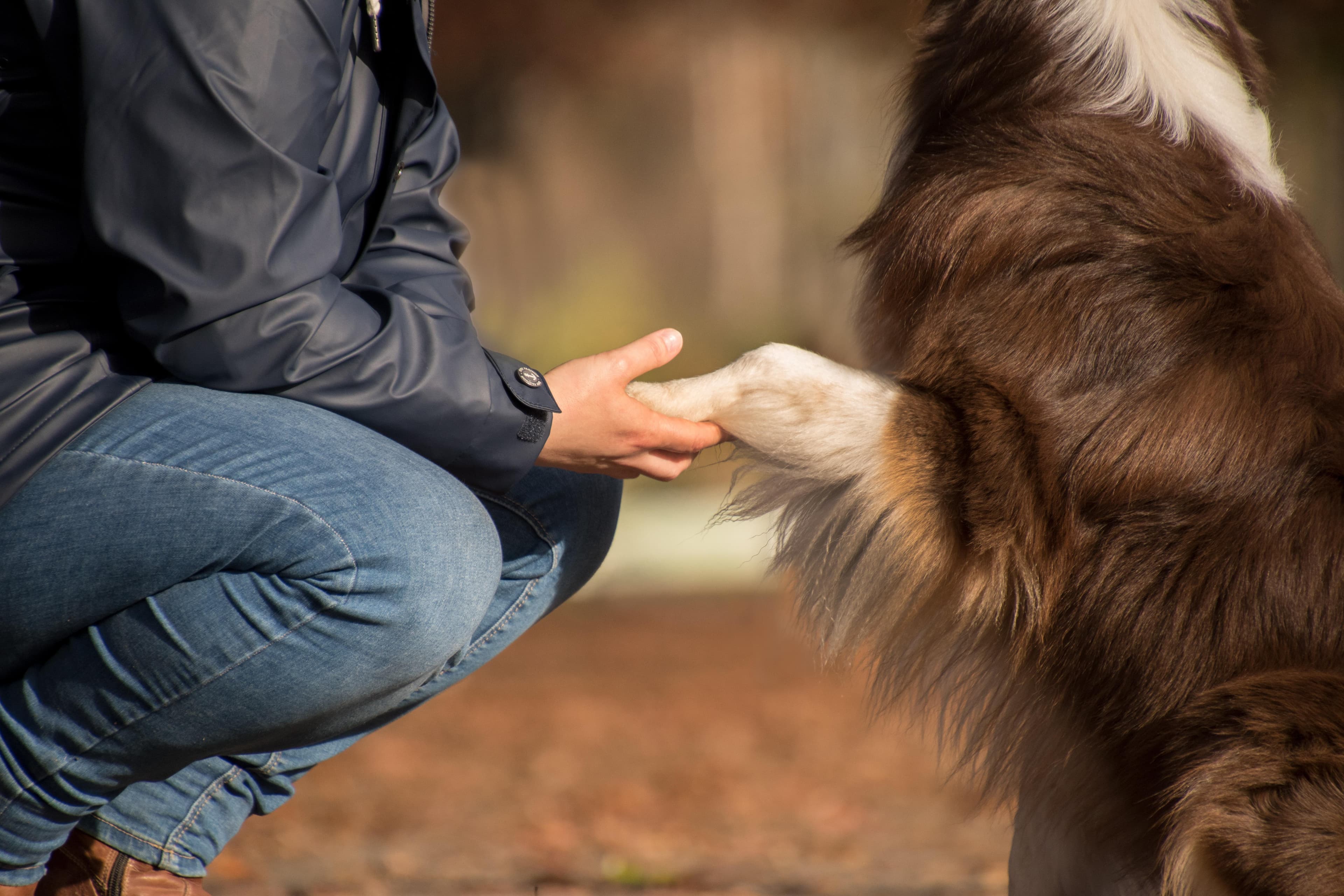
Although dogs are naturally affectionate, something truly special happens when they sense their owners are feeling low—they shift into “comfort mode.” They might curl up beside you, gently rest their head or paw on you, as if to say, “I’ve got you.” Some may even give soft, reassuring licks, like a furry kiss. These gestures are not random; they stem from instinctive pack-bonding behaviors passed down from their wild ancestors, where closeness meant safety, warmth, and trust. In their own adorable way, your dog is letting you know you are never alone.
Giving Their Owner Space
While some dogs respond to sadness by cuddling, others show empathy differently—by giving their owners space. This behavior doesn’t mean your dog is indifferent; rather, it reflects respect and sensitivity. Dogs that give space may lower their tail, avoid eye contact, or hang back until their owner is ready to engage. In doing so, they allow you to process your emotions at your own pace, demonstrating empathy in a quieter but equally meaningful way.
Distracting Method
When our loved ones feel sad or depressed, we often try to distract them—taking them out, engaging in fun activities, or simply playing to lift their spirits. Dogs do much the same. So, the answer to the question “Can dogs tell when you're sad?” is a resounding yes.
When your furry companion senses your sadness, they may try to cheer you up through playful distraction. Your dog might drop a ball at your feet, bring over their favorite toy, or invite you to play. If your dog loves the outdoors, they might try to get you outside, roll on the floor, or even perform the “zoomies” in an effort to make you smile. Often, dogs remember which actions have made you happy in the past and repeat them intentionally. These playful interactions are more than just fun—they’re a natural way your dog helps rewire your brain and mood through positive engagement.
Best Dog Breeds for Depressed People
Certain dog breeds seem to have an extra dose of empathy and intuition, making them especially attuned to their owners’ emotions. These breeds often excel in emotional support roles thanks to their gentle nature, loyalty, and trainability. Many of the breeds commonly recommended for emotional support or therapy work are skilled at providing comfort, companionship, and a sense of stability to people who need it most.
Labrador Retriever
Trait | Details |
Empathy Level | Very High – highly responsive to owners’ emotions |
Exercise Needs | High – daily walks and play are essential |
Maintenance | Moderate – seasonal shedding, needs regular brushing |
Potential Challenges | Can become restless or destructive without activity |
Unique Support Trait | Playful nature uplifts mood and motivates healthy routines |
Do dogs know when you are sad? Yes, they do—and few breeds are as skilled at sensing and cheering up their owners as the Labrador Retriever. Known for their goofy personalities and unwavering loyalty, Labs are one of the most popular breeds for people experiencing depression.
Don’t let their size fool you—Labradors are gentle, friendly, and deeply devoted to pleasing their owners. They are intelligent and highly intuitive, often able to read their owner’s emotions and respond appropriately. Their playful and energetic nature encourages owners to stay active, whether through walks, games, or outdoor adventures. With a Labrador Retriever, there’s rarely a dull moment.
Organizations like Freedom Service Dogs of America highlight Labs for their exceptional abilities as service and emotional support dogs, citing their intelligence, empathy, and adaptability as key reasons why they excel in helping people in need.

Golden Retriever
Trait | Details |
Empathy Level | Very High – calm and reassuring presence |
Exercise Needs | Moderate to High – thrives on outdoor activity |
Maintenance | High – heavy shedding, frequent grooming needed |
Potential Challenges | Grooming demands may feel overwhelming |
Unique Support Trait | Gentle affection and consistent cuddling bring comfort during low moods |
Golden Retrievers aren’t just adorable—they are known for their calm, friendly, and even-tempered nature, making them an ideal companion for someone experiencing depression. They are also intelligent, well-behaved, and excellent family dogs.
As their name suggests, Golden Retrievers excel at retrieving items. If you need something brought to you, even on your lowest days, a simple command is enough—they will happily fetch it. On days when you need comfort, they will gladly cuddle with you, offering love and reassurance. It’s no surprise that the American Kennel Club (AKC) ranks Golden Retrievers among the top breeds for service work.
The only notable downside is that Golden Retrievers shed quite a bit. However, this small inconvenience is far outweighed by the comfort, companionship, and affection they provide.

Cavalier King Charles Spaniel
Trait | Details |
Empathy Level | High – deeply attuned to their owner’s feelings |
Exercise Needs | Low to Moderate – short walks and indoor play suffice |
Maintenance | Moderate – brushing needed but not demanding |
Potential Challenges | Can develop separation anxiety if left alone often |
Unique Support Trait | Natural lap dogs who will provide warmth and constant closeness |
If you prefer a small dog, the Cavalier King Charles Spaniel may be the perfect companion. Despite their petite size, they have a big heart and an extraordinary ability to sense human emotions. Their sweet, affectionate nature and love for cuddles make them ideal for people experiencing depression. Cavaliers are often chosen as therapy dogs because they can communicate empathy through their soulful eyes, helping their owners feel less alone.
To stay healthy, Cavaliers require regular exercise. Engaging them in daily walks or playtime not only benefits the dog but also provides their owners with gentle physical activity, which can boost mental well-being and mood.

Poodle
Trait | Details |
Empathy Level | High – quick to bond and emotionally responsive |
Exercise Needs | Moderate – daily walks plus mental stimulation |
Maintenance | High – professional grooming required regularly |
Potential Challenges | Grooming time and costs can be significant |
Unique Support Trait | Hypoallergenic and intelligent, they offer both comfort and companionship |
Can dogs sense depression? Yes, they can—and Poodles are an excellent choice for people experiencing depression due to their love of companionship. Poodles are friendly, affectionate, and thrive on spending time with their owners, often actively engaging in ways that help lift their owner’s mood.
Poodles come in three sizes: Standard, Miniature, and Toy. Regardless of size, they form strong emotional bonds with their owners. Standard Poodles, with their larger size, are particularly well-suited for mobility service work. Another advantage of this breed is that they are hypoallergenic and do not shed, making them ideal for allergy sufferers. The only trade-off is that they require regular grooming to maintain their coat and overall health.
Disclaimer: The term "hypoallergenic" refers to dog breeds that are less likely to trigger allergic reactions, not breeds that are completely allergy-free. These dogs may shed less, have hair instead of fur, or produce lower levels of dander—all factors that can reduce, but not eliminate, allergic responses in sensitive individuals.

Cocker Spaniel
Trait | Details |
Empathy Level | High – forms strong emotional bonds |
Exercise Needs | Moderate – benefits from daily play or walks |
Maintenance | High – grooming required to manage coat |
Potential Challenges | Sensitive and can become clingy or anxious |
Unique Support Trait | Loyal and eager to please, they provide steady emotional support |
Cocker Spaniels are renowned for forming deep emotional bonds with their owners. While all dogs offer companionship, Cocker Spaniels have a special knack for providing unconditional support, love, and comfort—exactly what people experiencing depression often need.
Thanks to their intelligence, trainability, and friendly, eager-to-please nature, Cocker Spaniels make excellent service dogs for tasks that don’t require significant mobility assistance or physical strength. Their affectionate demeanor and attentiveness allow them to provide consistent emotional support, making them a reliable and loving companion.

Yorkshire Terrier
Trait | Details |
Empathy Level | Medium to High – very devoted to their owners |
Exercise Needs | Low – short walks and light play are enough |
Maintenance | High – long coat requires regular grooming |
Potential Challenges | Can be vocal and easily stressed |
Unique Support Trait | Small size makes them perfect all-day companions, even on low-energy days |
Yorkies rank among the top 30 smartest dog breeds. They learn quickly and can be trained for a variety of tasks, including service work. Their small size makes them ideal for apartments or senior owners with limited space.
Yorkies don’t require extensive exercise, which suits people with limited mobility, and their hypoallergenic coats make them a good choice for allergy sufferers. They also tend to have long lifespans, giving their owners many years of companionship. Best of all, their lively, spirited personality can bring joy and energy to any household, brightening even the gloomiest days.

Pug
Trait | Details |
Empathy Level | High – affectionate and people-focused |
Exercise Needs | Low – short daily walks are sufficient |
Maintenance | Low – minimal grooming required |
Potential Challenges | Health issues like breathing difficulties and weight gain |
Unique Support Trait | Cheerful and comical, their playful antics help lift spirits |
Pugs are smart, friendly, and cheerful dogs that are easy to care for, making them well-suited for therapy and emotional support roles. Their sturdy build allows them to handle frequent handling, which is an important trait for a therapy dog.
Pugs can also be trained as hearing-assistance dogs, alerting deaf owners to important sounds such as a doorbell or a baby crying. Additionally, they can be trained to detect certain medical conditions, including oncoming seizures or dangerous drops in blood sugar, providing both emotional and practical support to their owners.

What Else Dogs Can Sense?
Research shows they can—and that’s just the beginning. Dogs are also highly attuned to other emotions, including fear, anger, and stress, thanks to their acute sensitivity to human body language, vocal tone, and scent. They can even “mirror” their owners’ emotional states, reflecting stress, excitement, or relaxation.
Studies suggest that dogs mimic facial expressions not only with other dogs but also with humans. They often tilt their heads, raise their eyebrows, and make eye contact in ways that mirror their owners’ emotions, strengthening the bond between dog and human.
In addition, dogs’ extraordinary sense of smell allows them to detect physiological changes, such as those caused by cancer, pregnancy, or hormonal fluctuations. These abilities make dogs remarkable both as emotional companions and as detectors of physical changes in their owners.
Conclusion
Dogs form deep and unique bonds with their owners. Thanks to their remarkable sensitivity, they can detect and respond to human emotions, including sadness, stress, and joy. We hope this guide has provided you with valuable insight into the question “Do dogs know when you’re sad?” and helped you appreciate just how attuned and empathetic our canine companions truly are.
Frequently Asked Questions
Do dogs know when you are pregnant?
Yes. Thanks to their extraordinary sense of smell, dogs can detect the subtle changes in odor and hormones that occur during pregnancy.
Do dogs know when you’re hurt or ill?
Yes. Dogs can often tell from your facial expressions, body language, and scent if you are hurt or unwell.
How to get a therapy dog?
You can obtain a therapy dog through a professional trainer, a reputable breeder, or by adopting one from a rescue organization.
Can dogs be sad?
Yes. Dogs can experience sadness due to factors like the loss of a companion, changes in routine, lack of mental or physical stimulation, illness, or even sensing their owner’s emotional distress.
Is my dog depressed?
Your dog might be experiencing depression if you notice behavioral changes such as reduced interest in activities, low energy, or altered eating and sleeping patterns.
Reference List
https://www.npr.org/2024/07/23/nx-s1-5049543/dogs-stress-smell-study-emotions-decisions
https://www.akc.org/expert-advice/dog-breeds/most-popular-service-dog-breeds/
https://www.smithsonianmag.com/science-nature/dogs-mimic-each-others-expressions-too-180957618/
https://basepaws.com/dog-breeds/cavalier-king-charles-spaniel