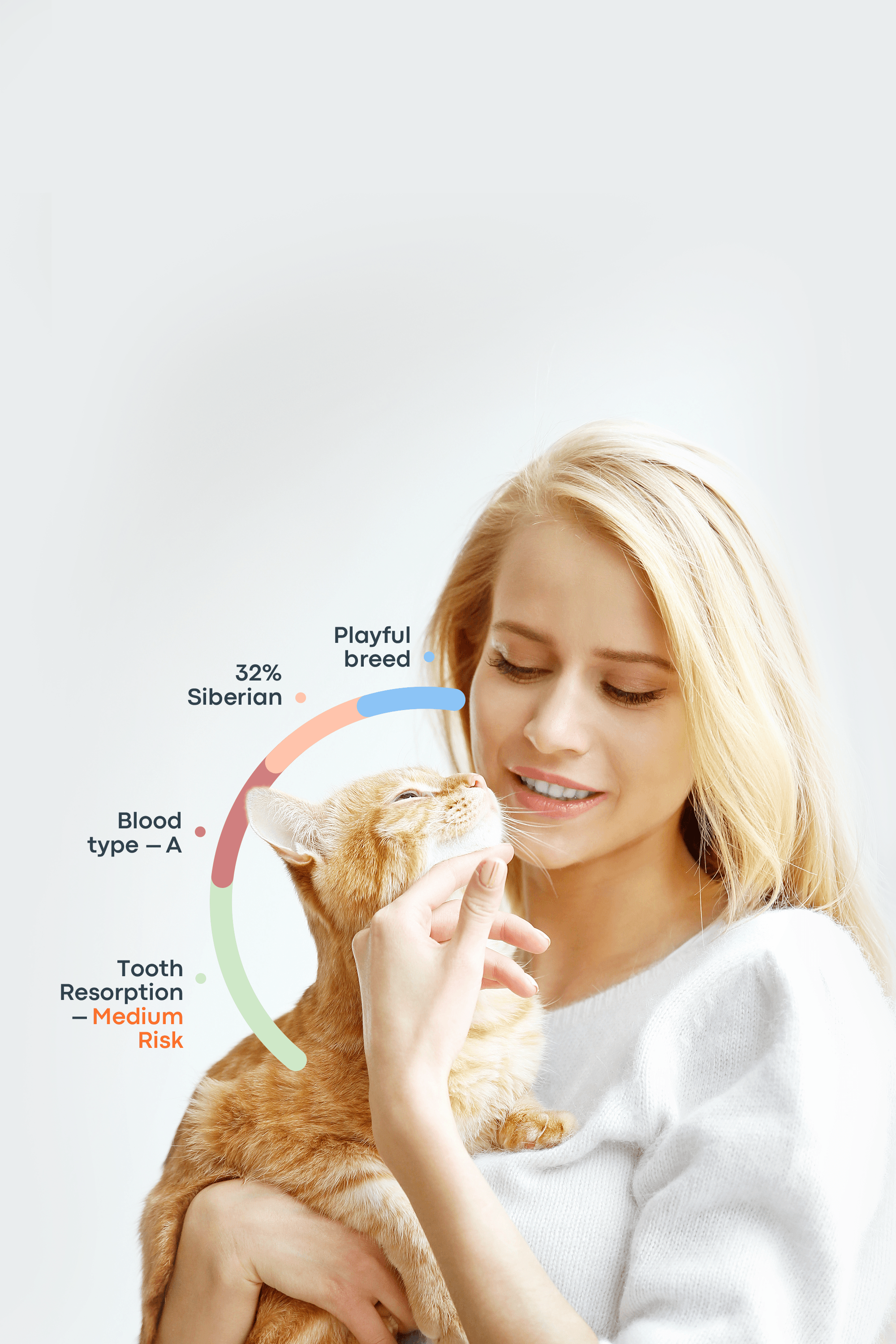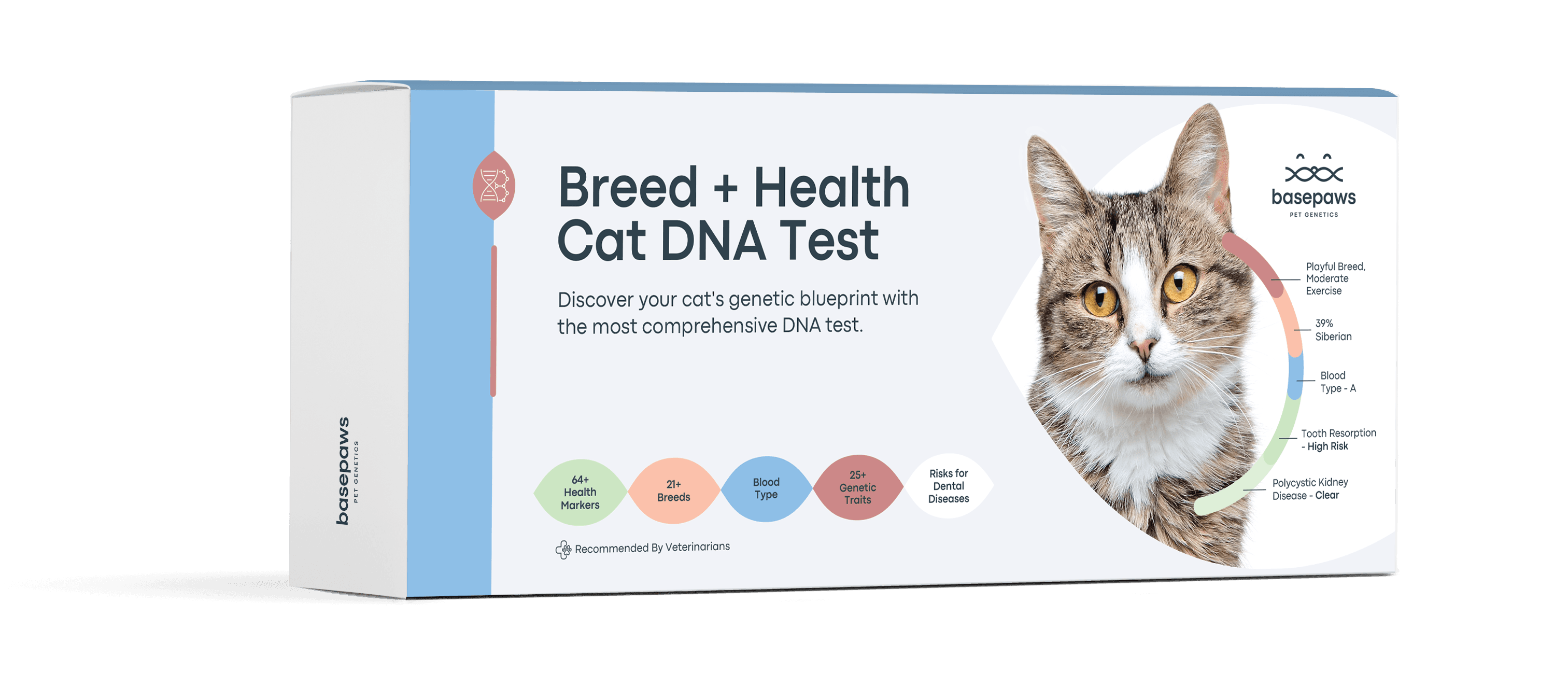
Don't know your cat's breed?
Get our DNA kit!
We often get questions about our Basepaws Cat DNA tests and whether they can be used for a deceased cat. Here is what you need to know if you want to do a DNA test for a deceased cat.
As we continue to grasp new knowledge and information in feline science, we drive the focus on Basepaws research initiatives which can help improve the understanding of feline biology and improve the health management of cats everywhere.
Hypertrophic cardiomyopathy (HCM) is the most common feline heart condition. The Basepaws Breed + Health Cat DNA test now screens for two additional genetic health markers associated with HCM to let pet parents know if their cat is at a higher risk for the disease.
Porphyrias is a term for a group of rare metabolic disorders that affect a cat’s ability to produce heme. Heme is an essential part of hemoglobin—a protein found in red blood cells that brings oxygen from a cat’s lungs to other parts of their body. Different types of porphyrias can occur in cats, as well as in humans and other animals. In this blog, we’ll discuss acute intermittent porphyria (AIP) in cats, its symptoms, and how it is diagnosed and treated by veterinarians.

From time to time, we update the Basepaws digital report of results for our Breed + Health Cat DNA Test. Today, we’d like to take a moment to share some details about two recent changes to our report—one for a genetic health marker linked to the common cat heart condition hypertrophic cardiomyopathy, and one for a genetic trait marker associated with the Siamese colorpoint coat pattern.
Today, we’re decoding one of the mysteries of genetics that relates to your Basepaws DNA report of results. It's called epistasis. When epistasis occurs, the observable expression (phenotype) of a gene—such as one responsible for the color of your kitty's coat—gets modified in some way by a completely different gene that has the ability to mask, suppress, or inhibit how that coat color gene is expressed. Epistasis helps explain why sometimes you may get a “likely to have” result for a genetic trait in your cat’s Basepaws report that doesn’t quite match up with their physical appearance.
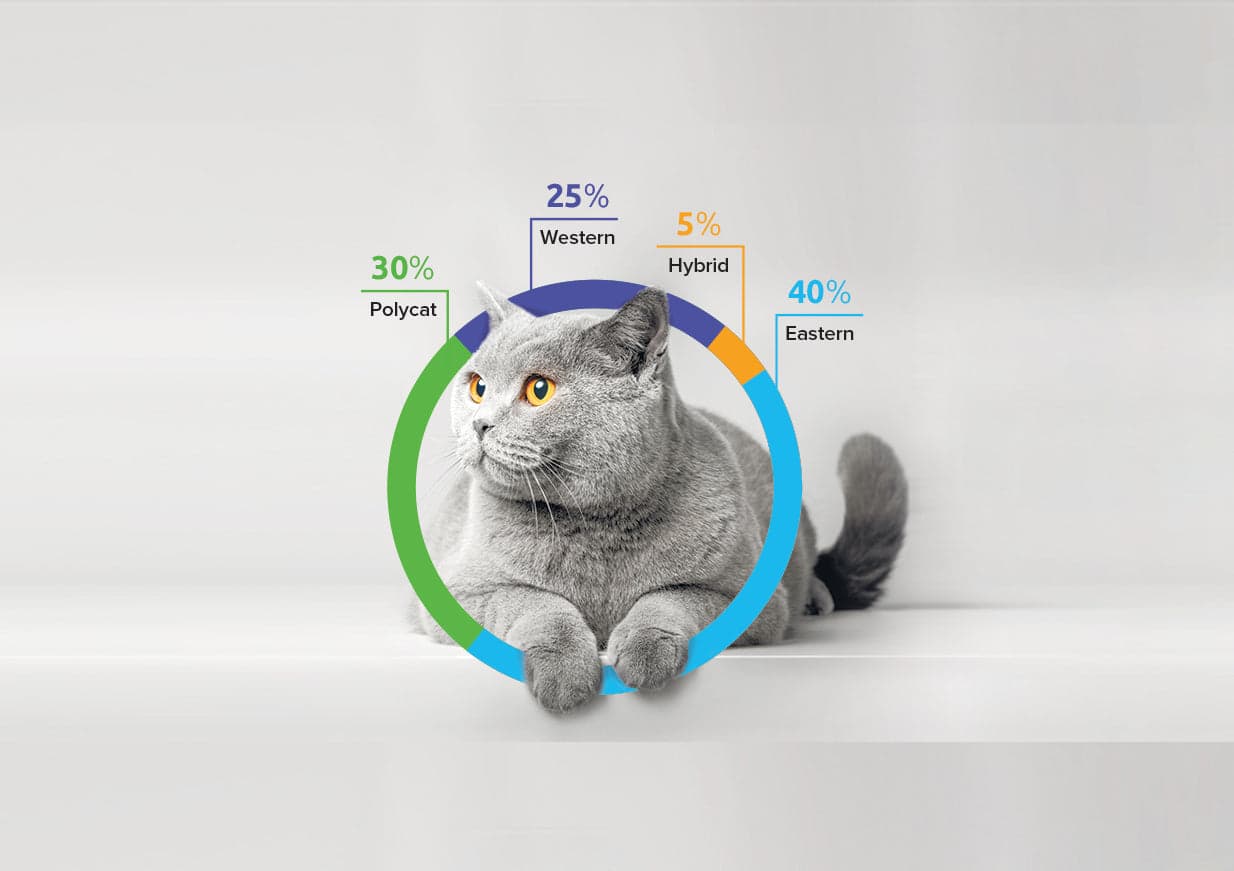
The breed analysis that you receive from a Basepaws Breed + Health Cat DNA test offers an exciting glimpse into your cat’s DNA story, yet much of it remains to be told. This includes a definitive story of ancestry, which is difficult to pin down for cats. In today’s post, we’d like to share some insight into why this is, and to explain the concept of genomic similarity that is at the heart of the Basepaws breed analysis.
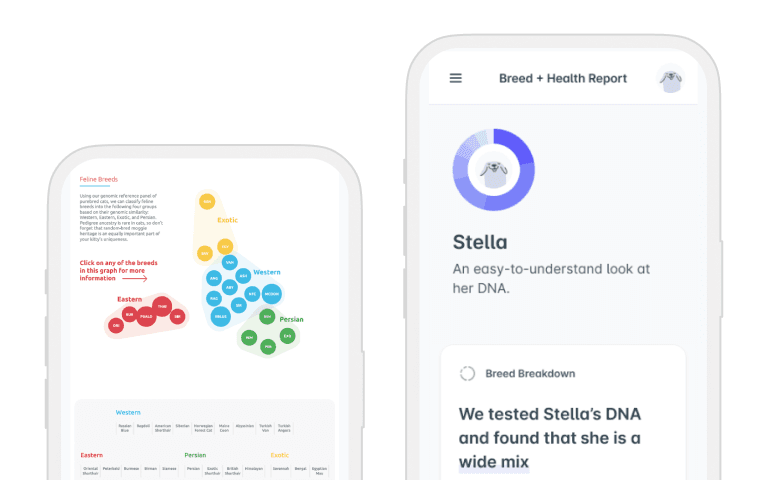
Enter your email to receive a sample report and preview the breed and health insights inside.