Don't know your cat's breed?
Get our DNA kit!

Have you ever wondered whether cats can get headaches? While they can’t tell us directly, cats may experience discomfort that resembles headaches in humans. If your cat has been acting unusually—such as hiding more often, avoiding touch, or showing changes in appetite or mood—you might worry that something is wrong. In this guide, we’ll explore whether cats can truly get headaches, the possible signs to watch for, common causes behind this kind of discomfort, and when it’s important to seek veterinary help. Understanding these signals can help you better support your cat’s health and comfort.

If you’re wondering why your cat is coughing, there are various reasons such as allergy, respiratory infection, or asthma. It is important to watch out for symptoms like wheezing or lethargy as these can help your vet identify the cause of the cough.

We all know that human females have menstrual cycles, which occurs when the uterus sheds its lining once every 28 days or so. But what about your cat? Do cats have periods? Is there such a thing as cat menstruation? Cats are among the group of mammals that go through estrus, a process also known as "in heat." Learn more about estrus, its signs, and how to support a cat in heat.
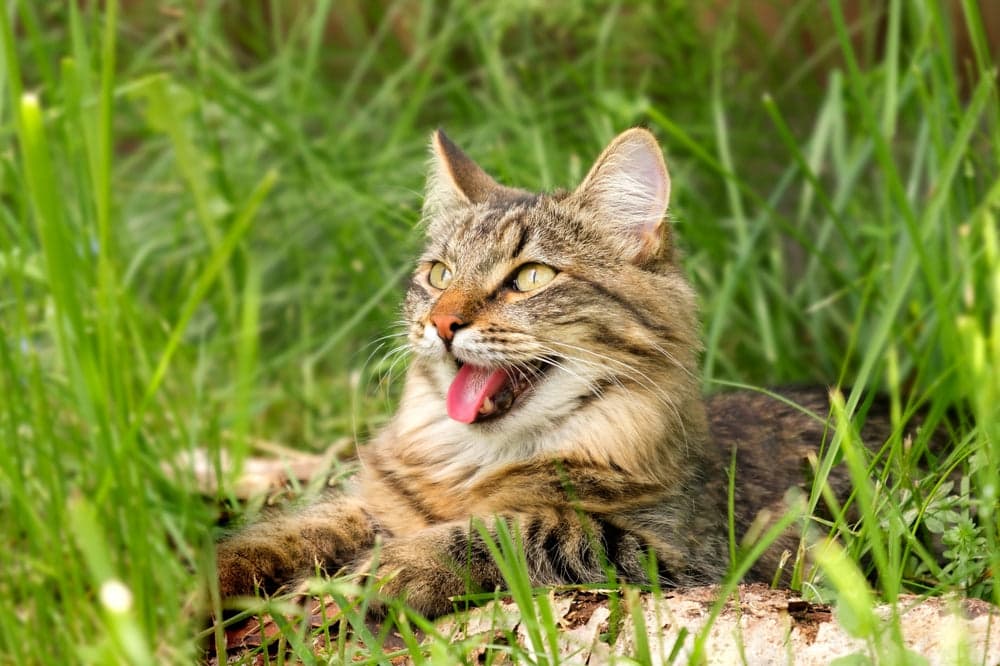
If you are a dog owner, then you will have grown accustomed to them panting on a regular basis as they cool down. However, panting is not typical behavior for a cat to display and, in many cases, is an indication that emergency care is needed. In this post, you’ll learn about all the common causes and solutions for cat panting.

While 2020 may look a little different than holidays past, many of our traditions remain the same. Decorations, presents, and the gift of giving keep the season bright for all. But in all the celebrations and decorations lurk several dangers for pets. To help keep the holidays safe and bright, here are some tips for holiday safety.

Have you ever wondered why your cat sticks their tongue out? What about a situation where they have their mouth open? While one’s tongue out can be a sign of silliness in the world of humans, it can have varying meanings in the feline world. Encountering a cat with tongue out may be confusing or possibly alarming at first, but you’ll soon learn this isn’t always cause for concern.

Bacterial infections in cats range from mild to severe, affecting the skin, organs, or digestive system. Early detection, treatment, and prevention are key.

Pothos are popular houseplants renowned for their attractiveness and hardiness. Pothos plants are an easy way to decorate with greenery and brighten your living space, but if you are a pet owner, beware. Despite their beauty, pothos are toxic to cats.