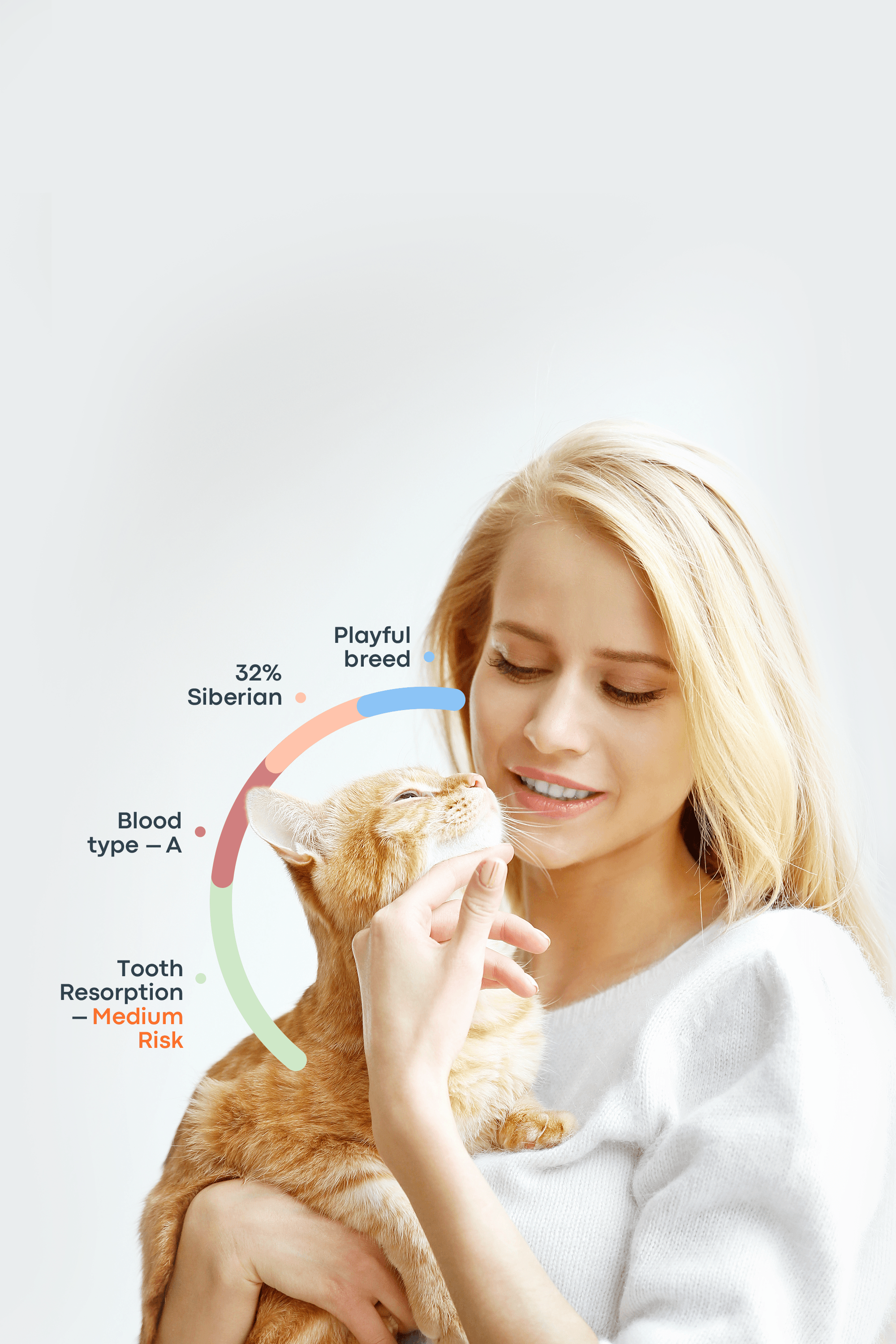

Cat

How Big Can Maine Coon Cats Get?
Maine Coon cats are one of the largest breeds of domestic cats in the world, with some males reaching up to 20 pounds or more when fully grown! Some believe that these cats originated in the state of Maine and are known as "gentle giants" due to their temperament and size. In this article, we will take a closer look at just how big Maine coon cats get.
Read more

Average Cat Weight: Norms for Domestic Cats
Maintaining your cat at a perfect weight is crucial for stopping a variety of fitness troubles and ensuring a highly satisfactory lifestyle. This article discusses the ideal weight for a cat, considering different breeds and weight categories.
Read more
What Can Cats Eat?
It’s common for us, humans, to be concerned whether cats can eat the same meal as we. You may ask “What can cats eat? Can cats eat human food?” Well, your cat can eat some human meals and not be affected, but also, some can be poisonous to your cat.
Read more

Can Cats Eat Cheese?
Cats love cheese and want to have a cheesy treat now and then. While cheese is not toxic to cats, it is unhealthy. In this article, we delved deep into understanding cats' dietary needs, the role of dairy in their diets, and the risks associated with your feline friends consuming cheese and other dairy products.
Read more

What Do Cats Think About All Day?
Cats have been with us since time immemorial. The expression of the cat's face is not as expressive as that of a dog, so the owners want to know what their pet is thinking at the moment and whether he is thinking at all.
Read more

Why do cats have whiskers
The muzzles of our feline friends, as well as the ones of other animals (rodents, dogs, seals), have long and thick whiskers. Animal whiskers, as they're commonly called, say a lot about their health.
Read more

When do kittens open their eyes
A kitten is born blind and helpless, but in only six months, it becomes an active and agile teenager, a small but well-armed predator with strong instincts that help him avoid dangers and survive in a complex and unpredictable world.
Read more

Why do cats sleep so much
Discover how much sleep cats need, why they sleep so much, and the impact of their sleeping patterns on their overall health and well-being.
Read more

Why do cats purr
A cat purring is a distinct vibrating sound of varying duration, often in a low pitch, that is generated by vibrations in the range of 20 to 50 hertz (according to Elisabeth von Muggenthaler, a bioacoustic specialist at the Fauna Communication Institute in North Carolina). This mode is pleasant to the human ear, it does not cause anxiety and irritation. This article will help answer two main questions. “Why do cats purr?” and “How do cats purr?”
Read more